

Infrastructure as code (IaC) has been one of the biggest enablers of the cloud-native era, with Terraform becoming the de facto standard for provisioning infrastructure across AWS, Azure, GCP, and beyond.
Terraform gave us a single declarative language, HashiCorp Configuration Language (HCL), and a managed infrastructure with version control and CI/CD.
But in 2023, HashiCorp switched Terraform from an open-source license to Business Source License (BSL), triggering a significant development by the DevOps community. This ultimately led to OpenTofu, preserving Terraform’s open roots.
This post covers both Terraform and OpenTofu, and also addresses whether or not OpenTofu can fully replace Terraform.
From Terraform to OpenTofu: What happened?
HashiCorp’s licensing switch in 2023 effectively meant that using Terraform in a SaaS or commercial offering might require permission.
In response, community members launched the OpenTF movement. Forking Terraform’s last open version (1.5.x), they built OpenTofu under the Linux Foundation, which oversees the project’s governance, openness, and long-term success.
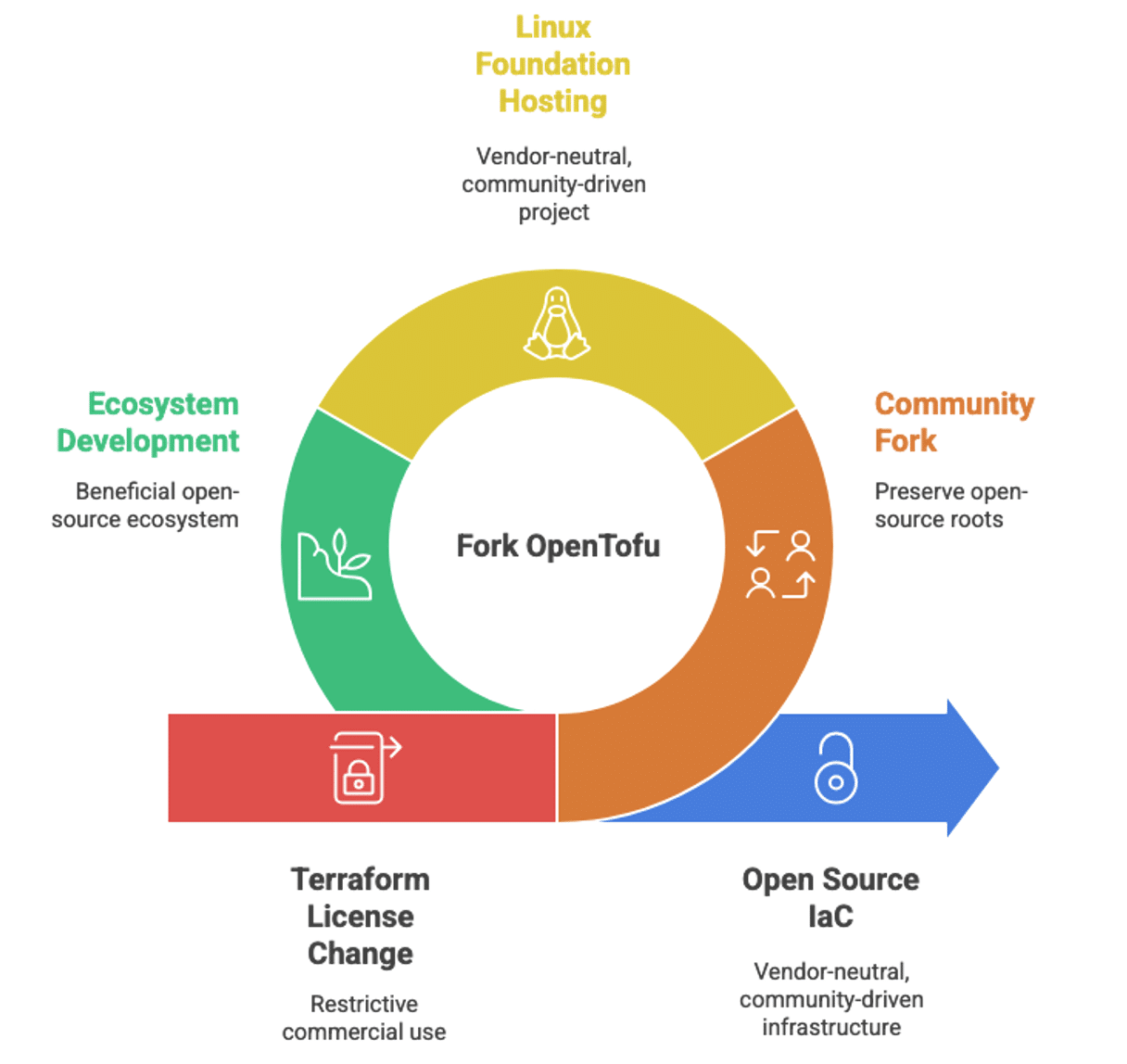
Figure 1: Birth of OpenTofu
Its goal was simple: Ensure infrastructure as code stays open, vendor-neutral, and community-driven. Two years later, OpenTofu isn’t just a fork but an incredibly useful tool with its own thriving ecosystem. But is it ready to replace Terraform completely?
Let’s first explore both tools.
What is Terraform?
Terraform is an IaC tool that uses HCL to define cloud and cloud-native infrastructure resources in code. It takes care of providing, updating, and managing infrastructure through providers and modules.
Example: Creating an AWS EC2 instance in Terraform Code
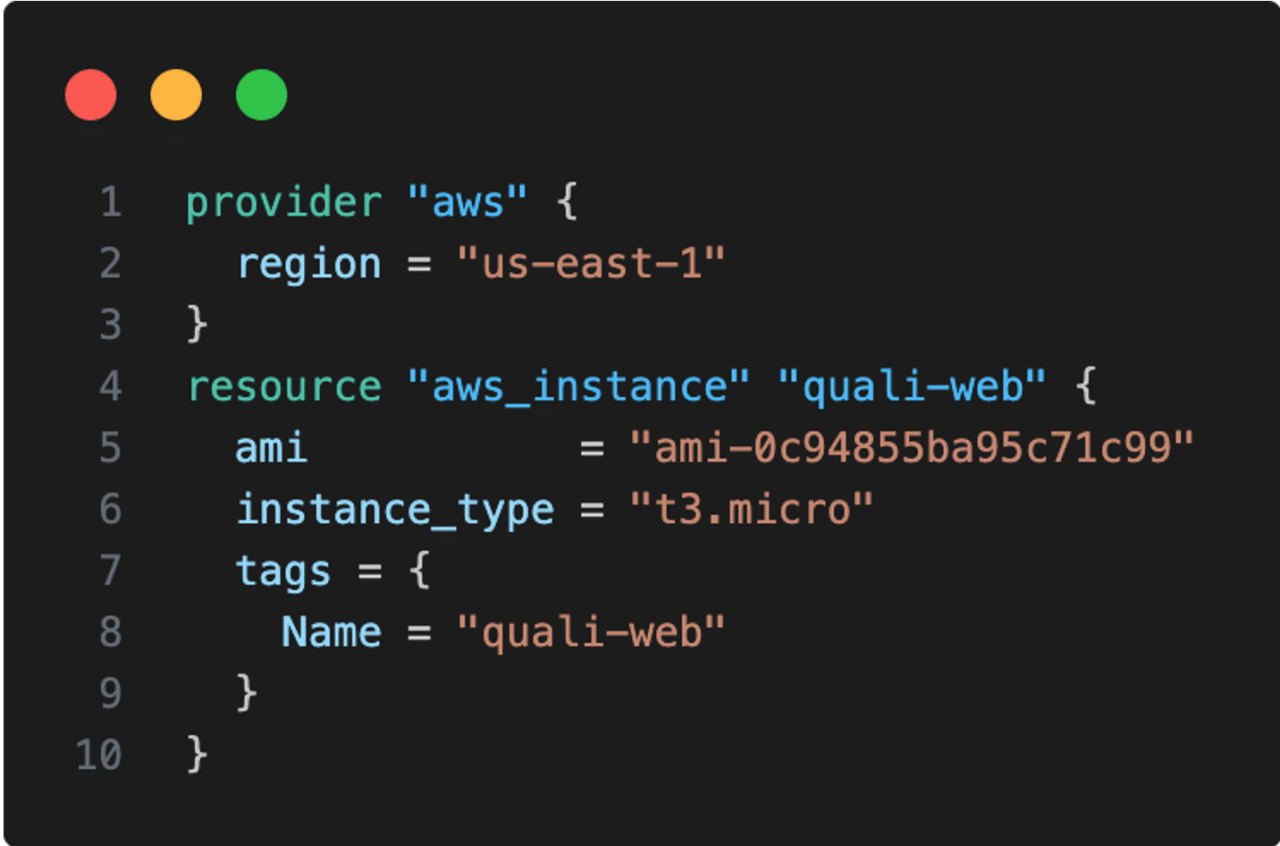
Figure 2: AWS EC2 Terraform Code
To spin up the instance, simply run the Terraform commands terraform init, terraform plan, and terraform apply.
What is OpenTofu?
OpenTofu is an IaC platform that allows teams to use declarative configuration files written in HCL to set up, maintain, and configure cloud infrastructure. This manages the lifecycle of resources on cloud providers like AWS, Azure, and GCP, enabling consistent and version-controlled infrastructure deployment.
OpenTofu is designed to work with other tools and encourage community-driven innovation. It’s compatible with Terraform while also offering its own features, like secure state encryption, better variable handling, and more flexible provider management.
Used by many DevOps teams in cloud-native production environments, OpenTofu boasts stability and compatibility on par with Terraform. With thousands of contributors and support from major DevOps vendors, the OpenTofu community hosts multiple online discussions, Slack channels, and meetups that reflect strong engagement.
Due to its open license, OpenTofu is also becoming more popular with enterprise customers and IT companies.
Terraform vs. OpenTofu
Let’s review the basic differences between the two solutions.
Cloud service capabilities
Terraform Cloud offers remote execution, state management, and team access. OpenTofu, on the other hand, does not have a first-party cloud service, although third-party tools like Env0 and Atlantis natively support it.
As a result, teams using OpenTofu must rely on third-party platforms for centralized execution and collaboration.
Community and support
The Linux Foundation provides a community-driven roadmap and fast responses to issues, while third-party vendors now offer OpenTofu-based managed services.
While Terraform has a large user base and commercial support through HashiCorp, its community-driven governance and third-party managed services are not as openly structured as OpenTofu’s ecosystem.
Licensing
| Tool | License | Usage Limitation |
| Terraform | BSL | Restricted for commercial redistribution |
| OpenTofu | MPL-2.0 (open-source) | Fully open and community-governed |
Core features
OpenTofu started out being fully compatible with Terraform, and it still uses the same syntax and providers. Taken together, these features don’t change how teams write infrastructure, but they do change how safely and predictably it runs at scale.
For teams choosing today, OpenTofu offers Terraform-level compatibility with fewer long-term constraints, which is why many migrations start as a governance decision rather than a technical one.
New features added by OpenTofu include:
- State and plan encryption: Secure state files natively.
- Skip resources: Skip specific resources during plan or apply.
- Provider iteration (for_each): Enable dynamic provider creation.
- Early variable evaluation: Fix old Terraform order-of-operations issues.
- .tofu file support: Write infrastructure as code with OpenTofu using .tofu files
Provider and modules
Both tools use the same provider ecosystem (AWS, Azure, GCP, etc.). OpenTofu has its own registry that mirrors Terraform’s providers, while Terraform modules (community or internal) work with OpenTofu without requiring any change.
Example: Creating an AWS S3 bucket in OpenTofu using an AWS Provider
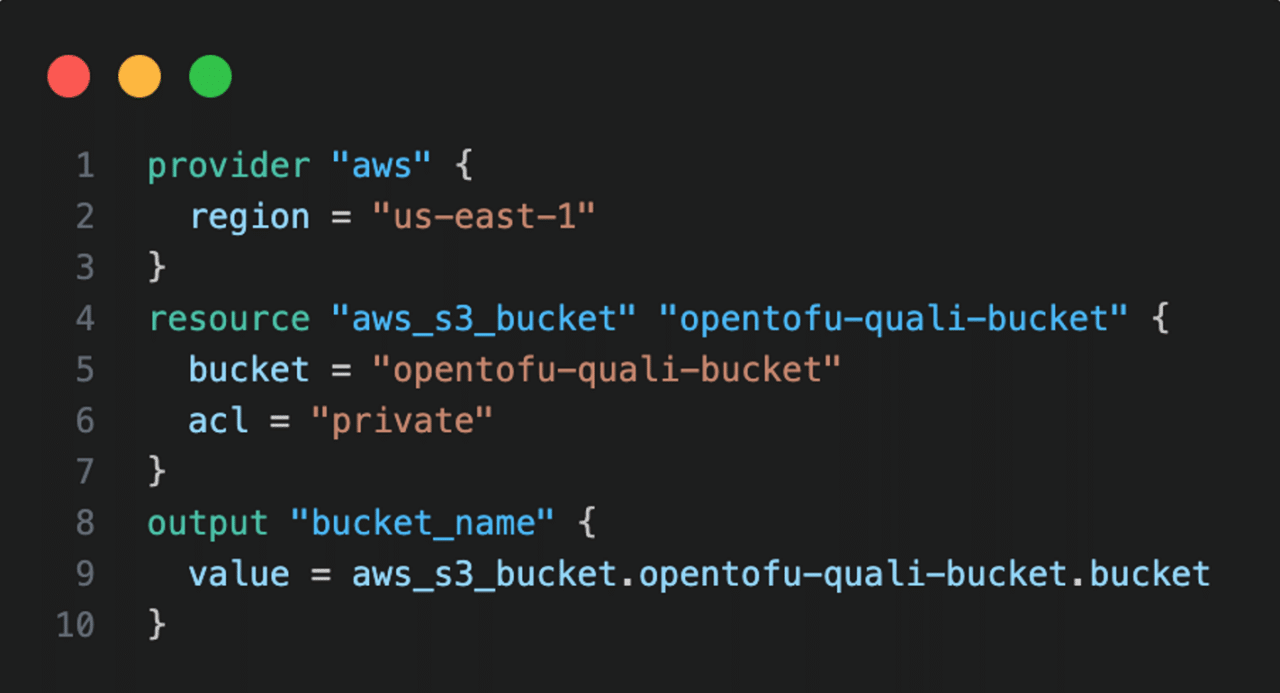
Figure 3: AWS Provider block with S3 bucket
If you’ve written Terraform code like this before, OpenTofu will handle it without a single line change.
Migrating from Terraform to OpenTofu
Migrating from Terraform to OpenTofu is relatively simple, as the tools share the same HCL syntax and backend structure.
- Install OpenTofu
#on mac
brew install opentofu
#or on Linux
sudo apt install opentofu
- Export your Terraform state
terraform state pull > terraform.tfstate
- Import into OpenTofu
tofu state push terraform.tfstate
- Initialize and plan
tofu init
tofu plan
You’ll see the same plan output, and OpenTofu is fully compatible with previously deployed infrastructure using Terraform.
To simplify and accelerate your OpenTofu resources, consider using Quali Torque. It leverages your OpenTofu modules so you can create, run, and update your infrastructure and environments in just a few clicks.
Migration example
Let’s walk through a migration scenario. Assume we have an existing Terraform project that provisions a simple AWS setup, an EC2 instance, and an S3 bucket. AWS EC2 and S3 resources can be migrated simply by pulling the current Terraform state, pushing it into OpenTofu, and re-running a plan to confirm no infrastructure changes are detected.
In practice, the switch is more about process alignment than technical effort.
Refer to Appendix A for the detailed, step-by-step migration commands.
Real-world migration scenario
Many teams have migrated to and use OpenTofu daily. General feedback from the community is that OpenTofu feels the same as Terraform, only it’s more open. Still, there are differences to be aware of.
Let’s consider a real-world scenario: Fidelity Investments moved over 50,000 Terraform state files to OpenTofu. While the technical changeover didn’t take much effort, getting the organization ready and making sure everyone was on the same page for the governance alignment was a significant hurdle.
Pros and cons of switching from Terraform to OpenTofu
| Aspect | OpenTofu | Terraform |
| License | Open-source (MPL-2.0) under the Linux Foundation, no usage restrictions | Business Source License (BSL), limits commercial redistribution |
| Community | Fast-growing, open roadmap | Controlled by HashiCorp, limited external influence |
| Feature velocity | Frequent community-driven updates (e.g., state encryption, provider iteration) | Slower release pace; commercial roadmap focus |
| Cloud support | Fully compatible with AWS, Azure, GCP, etc. | Same multi-cloud support; mature provider ecosystem |
| Security features | Built-in state & plan encryption; early variable evaluation | Security depends on external tools and practices |
| Tool support | Supported by third-party platforms (Env0, Atlantis) | Tight integration with Terraform Cloud and HashiCorp suite |
| Governance | Neutral, Linux Foundation–backed | Proprietary, Vendor-controlled |
| Enterprise features | No official SaaS, but supported by partners | Terraform Cloud / Enterprise provides SaaS, policy, RBAC |
| Migration effort | Drop-in compatible with existing Terraform code and state | N/A |
| Best For | Teams prioritizing open-source IaC tools, flexibility, and transparency | Enterprises needing official support or existing HashiCorp contracts |
What does the decision come down to?
Your choice of solution will come down to your project’s technical requirements, compliance needs, and team preferences. Some general guidelines would include the following.
Migrate to OpenTofu:
- If you want open governance
- If you want no license risks and better control
Stay with Terraform:
- If you rely on HashiCorp Cloud tools or have existing enterprise contracts in place
- If you have integrated Vault or HashiCorp-related products
Conclusion
Two years later, OpenTofu isn’t just a fork. It’s a stand-alone production-ready infrastructure-as-code platform for managing cloud workloads, hybrid infrastructure, or multi-cloud deployments.
Teams adopting OpenTofu are finding not only freedom from licensing uncertainty but also faster community response and collaboration. OpenTofu’s growth under the Linux Foundation proves that open governance can scale and that innovation happens when the community owns the roadmap.
For engineers looking for an open-source IaC tool, transparency, and long-term trust, 2026 might be the perfect time to make the switch.
Quali Torque helps operationalize OpenTofu adoption with governance, automation, and lifecycle management, enabling platform and DevOps teams to manage IaC environments securely and efficiently at scale.
To learn more about how Torque enhances OpenTofu, visit the Quali OpenTofu page, or explore our IaC code toolsand support for IaC solutions, including OpenTofu and Terraform.
FAQs
Are Terraform modules fully compatible with OpenTofu?
Yes. OpenTofu was designed to work with Terraform 1.5.x right away and works with most of Terraform’s modules.
Will Terraform providers work with OpenTofu?
Yes. OpenTofu works the same way as Terraform’s provider registry, and OpenTofu has the same syntax.
Is OpenTofu ready for use in production?
Yes. Many industry leaders already use OpenTofu in production with AWS, Kubernetes, Azure, etc.
Is there a cloud SaaS version of OpenTofu?
The project itself doesn’t have a Cloud SaaS version right now, but other platforms like Env0 and Atlantis do offer managed OpenTofu pipelines.
Is it worth it to switch from Terraform?
Yes, if you need full openness, transparency, and control. However, if you need Terraform Cloud’s enterprise features, it may be best to stay with it.