It’s the latest phase in the evolutionary development of artificial intelligence. And enterprises are scrambling to integrate the technology into their IT infrastructure in a bid to drive operational efficiencies and digital transformation.
But the current shift towards AI-agentic infrastructure presents potential risks to oversight, leaving the door wide open to security vulnerabilities, a lack of accountability, and misalignment with regulatory requirements and business expectations.
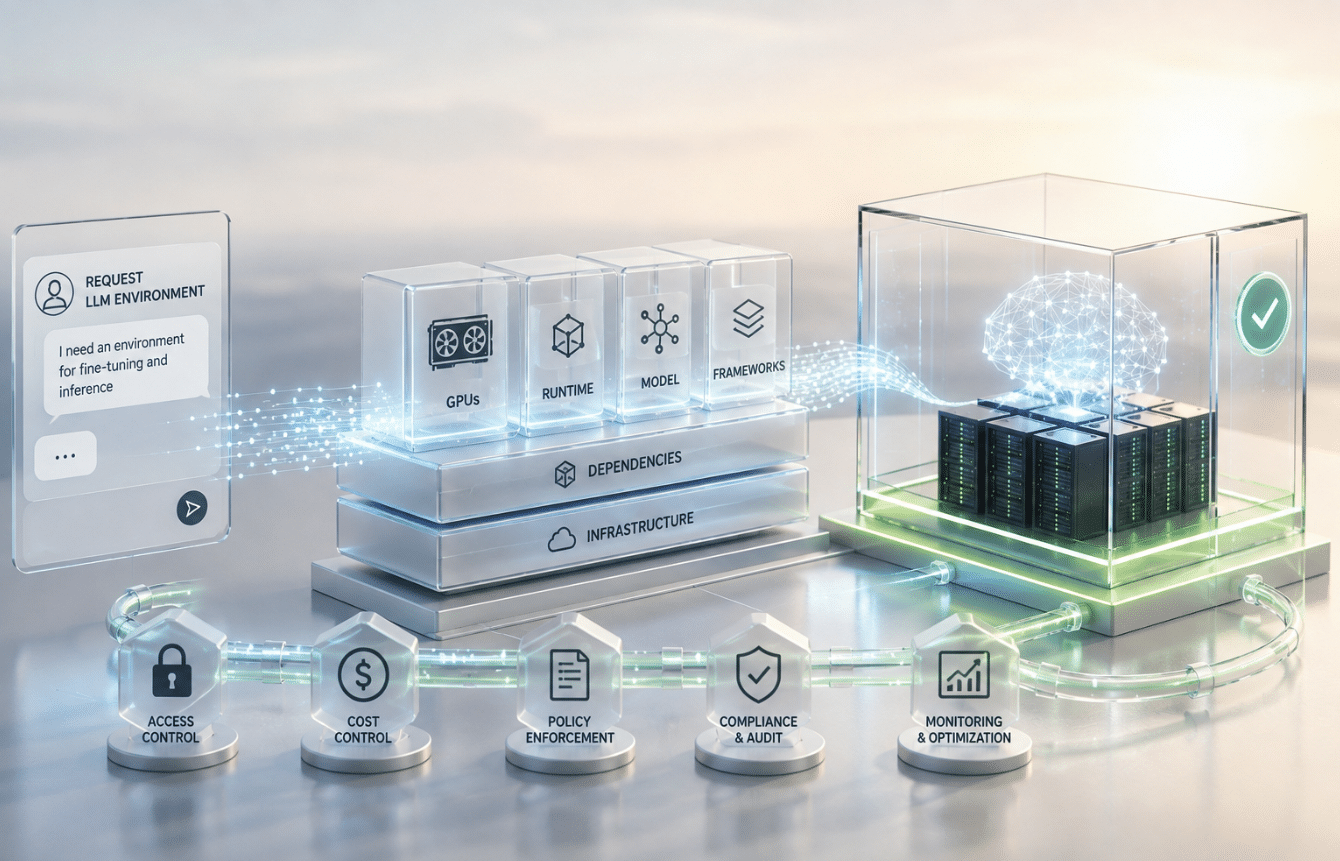
Guardrails, such as predefined thresholds, controlled access to resources, event logging, activity monitoring, and manual review of anomalous operations, can help keep the risks to a minimum. All the more so in cloud-based environments, where an agent could indiscriminately provision, modify, or terminate services in violation of strict governance protocols.
In this post, we discuss in detail why these guardrails are so important to risk management, financial discipline, and strategic alignment with your business goals.
But first let’s briefly remind ourselves of what agentic AI and AI-agentic infrastructure actually mean.
What Is Agentic AI?
Agentic AI is an orchestrated system of autonomous agents that use reasoning capabilities to accomplish tasks with limited supervision.
Unlike traditional automation scripts that follow rigid rules, agentic AI systems can interpret intent, collaborate across workflows, and adapt in real time, much like a team of skilled engineers making coordinated decisions across environments.
It’s also possible to program a legacy agent to provide much the same capabilities. However, this can often be a formidable challenge using traditional coding methods.
Much of the power of agentic AI lies in the far greater ease and flexibility in the way it can orchestrate a multitude of interdependent processes, offering a more streamlined method of performing complex tasks and reducing dependence on technical expertise.
Agentic-AI Infrastructure
Agentic-AI infrastructure is simply the application of agentic AI in IT architectures with the purpose of intelligently and autonomously managing resources. The technology behind it can be integrated into your developer platform, can be deployed to either public cloud or on-premises environments, and support hybrid cloud and multi-cloud architectures.
Why Guardrails Matter
Key Guardrail Categories in AI-Agentic
| Guardrail Type | Purpose | Examples |
| Visibility & Audit | Understand and trace agent decisions | Logging, event tracking, anomaly detection |
| Cost Controls | Prevent overprovisioning, optimize ROI | Idle resource cleanup, budget caps, usage reports |
| Security Rules | Enforce secure configurations | Block open ports, enforce encryption, access limitations |
| Policy Compliance | Align with governance standards | Role-based access, provisioning policies, tagging practices |
Agentic AI can save DevOps and platform engineering teams significant time and effort by:
- Generating infrastructure as code (IaC) in response to simple natural language requests
- Automating infrastructure management
It also eliminates many of the problems that can arise out of human error. But, just like humans, it can also make flawed decisions and thereby presents its own challenges to ensuring reliable, consistent, and efficient IT environments.
The following are the key areas in which guardrails help prevent your infrastructure from going out of kilter.
Visibility and Control
Without visibility and control over your infrastructure, AI agents could be allowed to follow a range of unintended courses of action.
For example, they may give an inconsistent response to events, such as provision requests. This could potentially lead to configuration drift with consequences such as:
- Misconfigurations and unnecessary complexity
- Incompatibilities and system crashes
- Environments that are more difficult and expensive to maintain
As well as helping to prevent divergence, visibility into agent behavior will help you maintain governance, fine-tune AI models, and keep your IT stack up to date and in line with latest requirements.
It’s also key to overcoming any transparency issues. For example, it may not be immediately clear why your agents take a specific course of action in response to an event. Consequently, measures such as logging and monitoring are particularly important, as they can provide both a deeper understanding into agent behavior and an audit trail to support accountability.
Similarly, oversight serves as a safety net in cases such as where a team member uses ambiguous language to issue agents with instructions, as this has the potential for misinterpretation and subsequent misconfiguration.
Cost and Performance
In public cloud environments, provisioned resources should strike a healthy balance between cost and performance. So, in line with conventionally managed cloud infrastructure, you’ll need to incorporate controls to help keep a lid on costs.
For example, guardrails should include:
- Scaling policies to govern instance and horizontal cluster sizes
- Measures to identify and close down idle resources
- Spending caps to ensure your resource consumption stays within budget
- Reporting and alerting mechanisms
Furthermore, you should monitor your infrastructure for unhealthy AI agents and other unresponsive services, as these not only unnecessarily consume resources but can also potentially lead to system crashes.
Security and Compliance
It’s perfectly possible for even the most robust AI model to deploy insecure infrastructure. So it’s essential you embed security controls into your agent workflows.
For example, you should provide agents with provisioning rules to prevent:
- Overly permissive access controls
- Open ports that serve no purpose
- Unencrypted communication and storage
In addition, you should look to implement controls to ensure they spin up only those resources that are actually needed, as this will help keep the attack surface to a minimum.
Guardrails should also cover identities by governing which of these can provision and change resources and have access to specific systems, networks, tools, and data.
At the same time, you should use guardrails as a compliance tool through measures that ensure agents configure environments in line with regulatory requirements.
And, finally, most of the guardrails you have in place will help demonstrate accountability—because they show you continually keep track of your infrastructure and endeavor to stay on top of your compliance obligations.
A Balance between Autonomy and Control
To truly harness the potential of agentic AI, organizations must treat guardrails not as constraints but as accelerators. Done right, these controls allow AI agents to operate with confidence, scaling infrastructure, optimizing spend, and enforcing security, all without sacrificing oversight. Guardrails don’t slow down innovation. They make speed safe.
Explore how environment the Torque control plane helps teams scale responsibly with built-in governance from day one. Try out the Quali Torque playground to get hands-on experience and see for yourself how a modern platform can transform your business,