For most of computing history, infrastructure has belonged to somewhere. A data center. A cloud account. A region. A network. An organization. We designed the automation around those boundaries because the infrastructure could not easily escape them. That is an assumption that is beginning to break.
Once infrastructure can be defined independently of where it runs, governed across organizational boundaries, and delivered into environments the automation platform does not directly control, location stops being part of the infrastructure model. What emerges is something different from hybrid cloud or multicloud. Infrastructure itself becomes federated.
This is not simply another way to connect more clouds. It changes the unit of thinking. Instead of asking which estate owns a workload, an infrastructure platform can increasingly ask what the workload needs, what infrastructure is permitted to satisfy that need, and where suitable capacity exists.
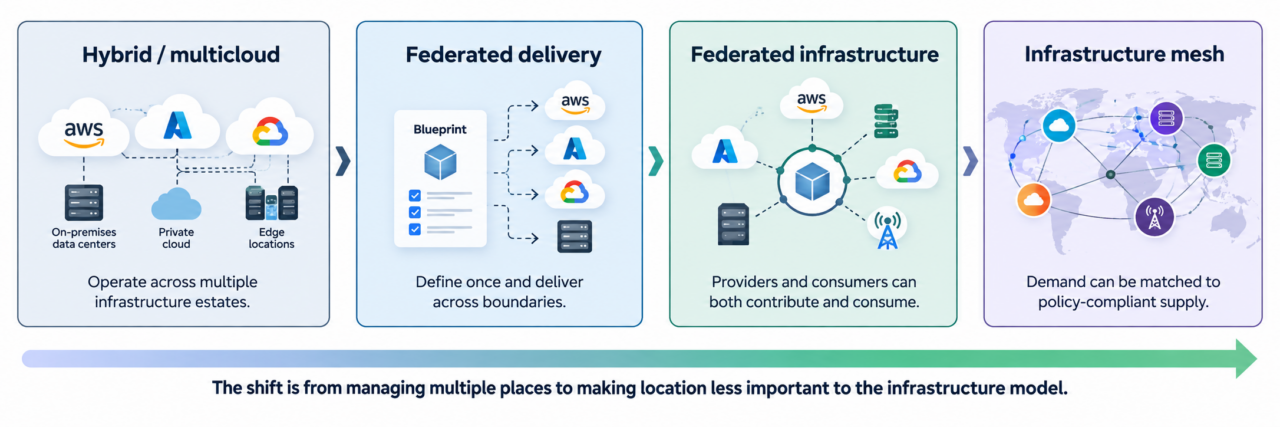
Figure 1. From managing multiple infrastructure estates to making infrastructure itself federated.
The important change is not reach. It is independence.
Remote execution is not new. Neither are agents, VPNs, multicloud management, or infrastructure-as-code. The architectural change comes when the definition of an environment no longer has to be rewritten around the place in which it will run.
In Torque, a blueprint describes an environment: infrastructure, applications, networking, policy, and the relationships between them. The blueprint declares what it needs and binds to target infrastructure at deployment time. Spaces establish who can consume which blueprints and carry their own permissions, policies, approvals, and cost visibility.
Federation then allows those capabilities to cross organizational boundaries. A provider can share blueprints, infrastructure, or both with subscribers. Shared content arrives inside the subscriber’s account as something it can consume through the same operating model it already uses. Execution can occur inside the target environment through an outbound-only agent, keeping credentials local.
That combination matters because it separates three things that have traditionally been tightly coupled: who defines the infrastructure, who owns the infrastructure on which it runs, and who consumes the resulting service.
From provider and consumer to participant
The first generation of federation is easy to understand: one organization provides and another consumes. A central IT team publishes a catalog. A technology company distributes a ready-to-run environment. A service provider delivers a managed service into a customer’s cloud account. A partner takes an upstream blueprint, adds its own technology, and delivers the result to its customers.
The model becomes much more interesting when the consumer can become a provider. Torque’s multi-level federation model allows that relationship to continue: Company A can publish to Company B; B can add what it owns without forking A’s work; and B can then deliver the combined service to Company C. Governance and usage remain visible at each level.
At that point, ‘provider’ and ‘consumer’ stop being permanent roles. They describe what a participant is doing at a particular moment and that is the beginning of Federated Infrastructure.
Infrastructure becomes a supply question
Consider the infrastructure that already exists across a large enterprise or ecosystem. A corporate data center may have unused capacity overnight. A GPU cluster may sit between training runs. A partner cloud may have capacity available in a region that another participant needs. Edge sites may have local compute that must remain local for latency, sovereignty, or operational reasons.
Today those resources are normally treated as separate estates. Ownership and location determine what can use them. Even when capacity exists, a team elsewhere may have no practical way to discover it, govern access to it, or assemble a complete environment from it.
Federated Infrastructure changes the question from ‘Which infrastructure do I own?’ to ‘Which infrastructure can satisfy this requirement?’ The blueprint provides the common description of the requirement. Governance determines which sources are permitted. Federation makes infrastructure across ownership and network boundaries reachable through a consistent model. Discovery, inventory, scheduling, usage, and cost data provide the information needed to decide what is actually available.
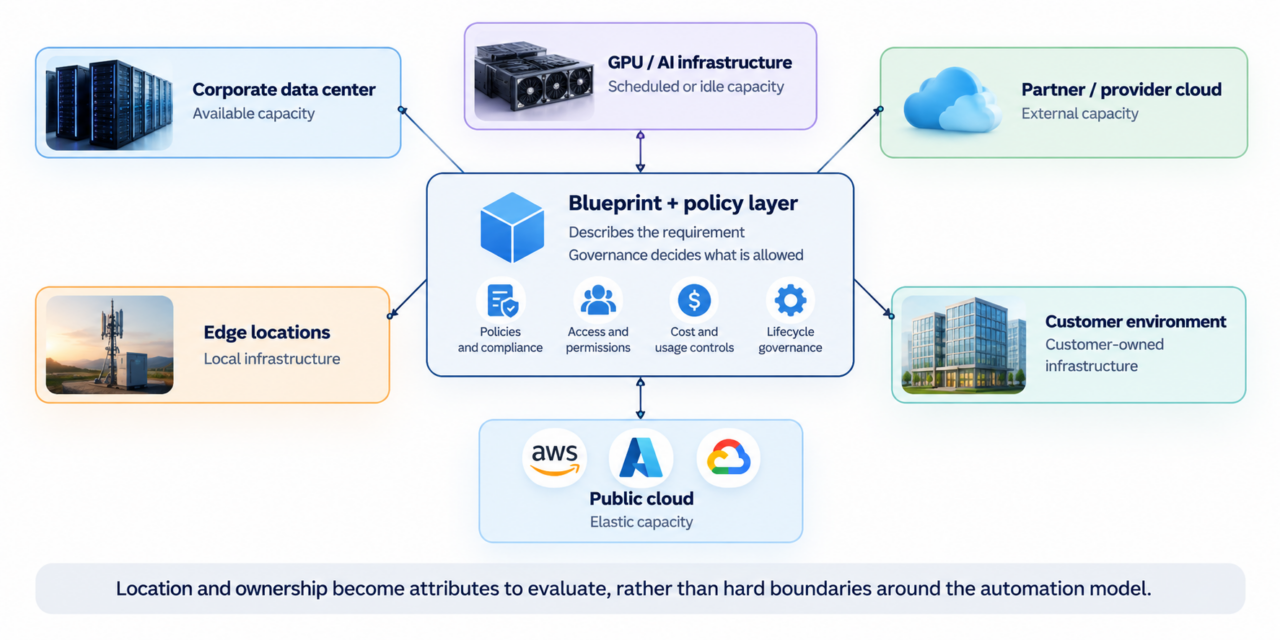
Figure 2. A blueprint and policy layer can make location and ownership attributes of a deployment decision rather than fixed boundaries.
Why AI infrastructure makes this more than an architectural exercise
AI infrastructure exposes the weakness of location-bound thinking particularly quickly. Accelerated compute is expensive, availability varies by provider and geography, utilization changes with training and inference cycles, and data or regulatory requirements may restrict where a workload is allowed to run.
A team may therefore face an odd situation: it needs capacity while suitable capacity exists elsewhere in the same organization or ecosystem, but the two cannot easily be brought together operationally.
A federated model creates the foundation for a different approach. The workload can describe the infrastructure it needs rather than naming a fixed destination. Policy can constrain eligible locations and providers. Available capacity can be discovered and evaluated against those requirements. The eventual goal is not merely to shut down idle infrastructure; it is to make suitable capacity useful wherever demand exists.
That is a materially different objective from cloud cost optimization. Optimization asks how to spend less on the infrastructure already assigned to a workload. Federation opens the possibility of deciding which infrastructure should be assigned in the first place.
The edge is the other obvious proving ground
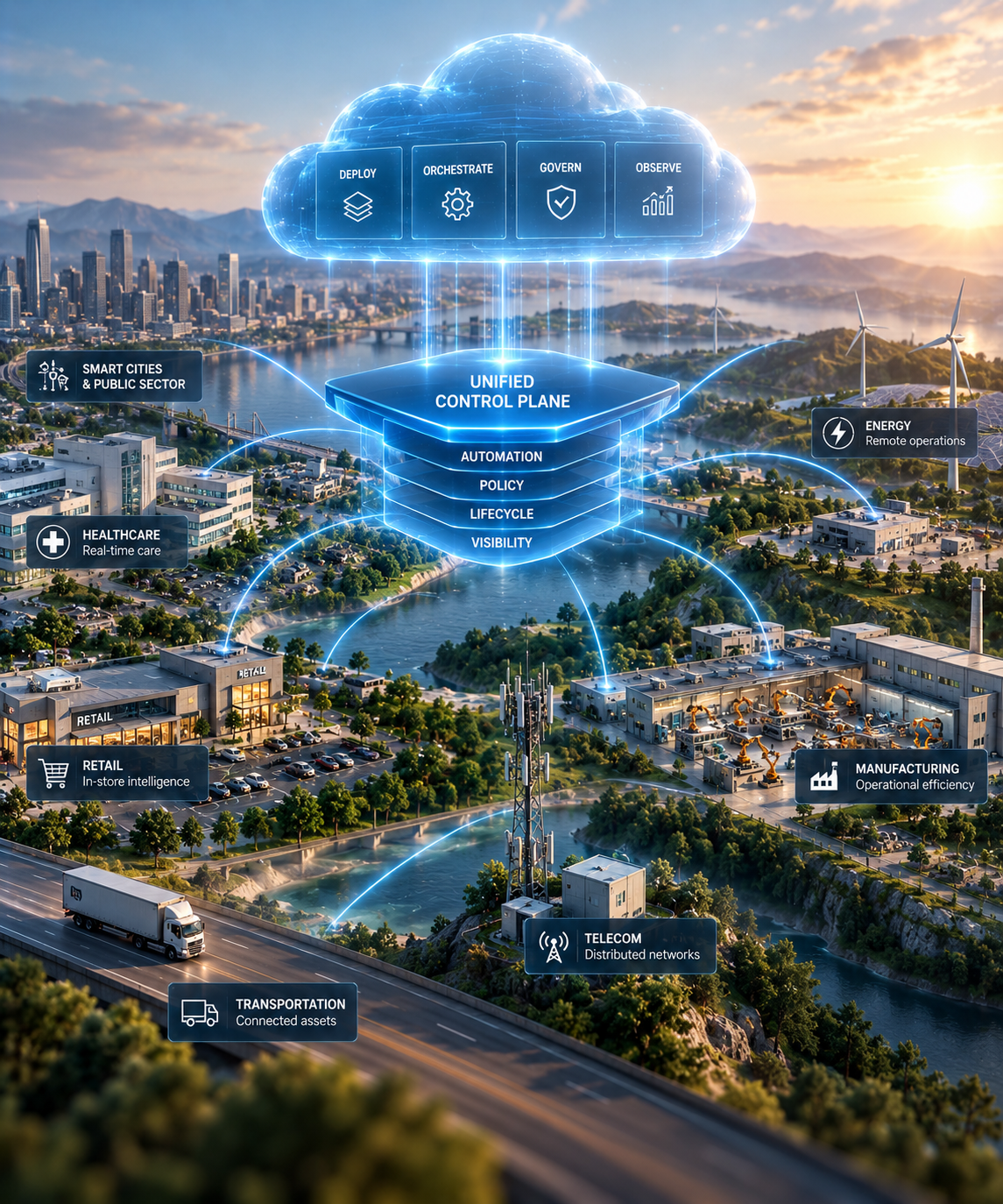
The same architecture matters for the opposite reason at the edge. Instead of scarce centralized capacity, the problem is extreme distribution. A retailer, manufacturer, healthcare network, or communications provider may operate hundreds or thousands of sites with different hardware, limited local IT staff, segmented networks, and applications supplied by multiple parties.
The conventional response is to copy automation outward. That creates local variants, local maintenance, and eventually drift. Federation allows the base infrastructure definition to remain common while regions, partners, or site operators add only the variation they own. One change to the base can continue to flow through the hierarchy without forcing every participant to surrender control of its own layer.
The result is not centralization. It is coordinated decentralization: local infrastructure and local ownership, governed through a common model.
What exists now, and what comes next
It is important not to confuse the architecture with its end state. Federation is available today. Torque can share blueprints, Spaces, and infrastructure between provider and subscriber accounts; consumers can extend upstream blueprints; services can be delivered into customer-owned infrastructure; and the model can continue across multiple levels.
The broader infrastructure mesh is the direction these capabilities make possible, not a claim that every part of that market already exists. A true mesh requires the platform to see what is live, idle, scheduled, reserved, and available across participants; make heterogeneous infrastructure comparable enough to govern and trust; and match demand to appropriate supply.
Torque already provides pieces of that foundation through blueprints, lifecycle control, discovery and inventory, scheduling, and usage and cost tracking by environment, blueprint, Space, and cloud account. Federation adds the ability to carry the operating model across ownership boundaries.
The next step is turning those pieces into a system in which infrastructure can be offered, discovered, reserved, and consumed according to policy rather than organizational topology.
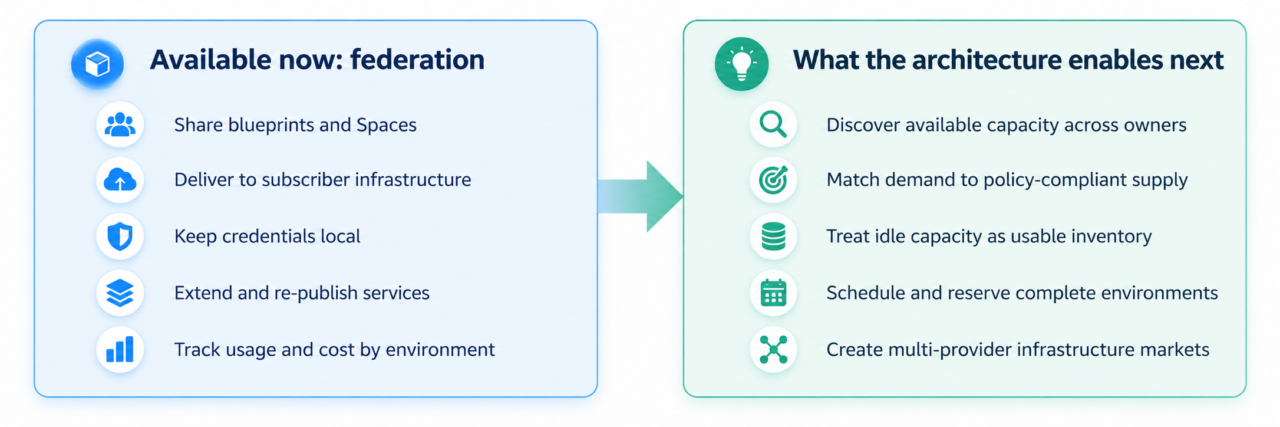
Figure 3. Federation is available now; the infrastructure mesh is the architectural direction it enables.
Idle capacity becomes inventory
This changes the economics as well as the architecture. Infrastructure that is not currently doing useful work is normally treated as waste: something to rightsize, switch off, or remove. Those actions still matter. But once capacity can be described, governed, exposed, and consumed across boundaries, some idle infrastructure can become inventory instead.
A reserved GPU window, available private-cloud capacity, or a partner-operated environment can potentially be offered for another permitted use rather than simply sitting dark. The value is no longer limited to the minutes a resource happened to run. Capacity can be scheduled, held ready, assembled into a complete environment, and delivered against an outcome.
This does not mean every enterprise becomes a cloud provider. It means infrastructure owners gain another option. Capacity can be consumed internally, exposed to partners, incorporated into a service, or potentially made available to a broader ecosystem when the governance and commercial model allow it.
Beyond hybrid and multi-cloud
Hybrid cloud and multicloud describe where infrastructure exists. Federated Infrastructure describes how infrastructure can be used when those locations and ownership boundaries no longer dictate the automation model.
That distinction matters. An organization can operate ten clouds and still manage them as ten separate estates. Conversely, a federated model can span a public cloud, a customer’s account, a private data center, an edge site, and partner-owned capacity while presenting a consistent way to define, govern, deliver, and account for the resulting environments.
The objective is not to make every infrastructure source identical. It is to make the differences manageable without forcing every consumer to understand and automate them independently.
Infrastructure, unbound
For most organizations, infrastructure has been something they build somewhere and then operate there. Federation makes it possible to separate the thing being delivered from the place that happens to supply it.
That starts with a deceptively simple idea: define infrastructure once and allow the destination to be resolved later. Add governance that survives organizational boundaries, a delivery mechanism that can execute where the infrastructure lives, and a model in which consumers can themselves become providers, and the implications become much larger.
Infrastructure can be packaged. Extended. Delivered as a service. Passed through partner ecosystems. Applied consistently across thousands of edge locations. And, increasingly, capacity can be considered according to whether it is suitable and available rather than simply who owns it.
The network boundary has already started to disappear from the automation model. The next boundary to weaken may be ownership itself. That is the idea behind Federated Infrastructure.
See how Torque provides the control plane for infrastructure automation across cloud, data center and edge environments, or talk to us about how federated infrastructure could apply to your environment.
Associated blog: Infrastructure, Unbound: Build Once. Deliver Anywhere. Extend Everywhere.