Every enterprise is racing to put large language models into production. Few are happy with how it’s going.
Gartner projects that by 2026, more than 80% of enterprises will have deployed generative AI APIs or models in some form, up from less than 5% in 2023, one of the fastest technology adoption curves on record (Gartner, cited via Index.dev). But adoption isn’t the same as operation. Once the pilot works, someone has to run the thing: provision the GPUs, pin the runtime and model version, keep training and production in sync, watch the spend, and prove to security and compliance that nobody spun up a model outside the guardrails. That’s the part nobody budgeted for, and it’s where most LLM initiatives quietly stall.
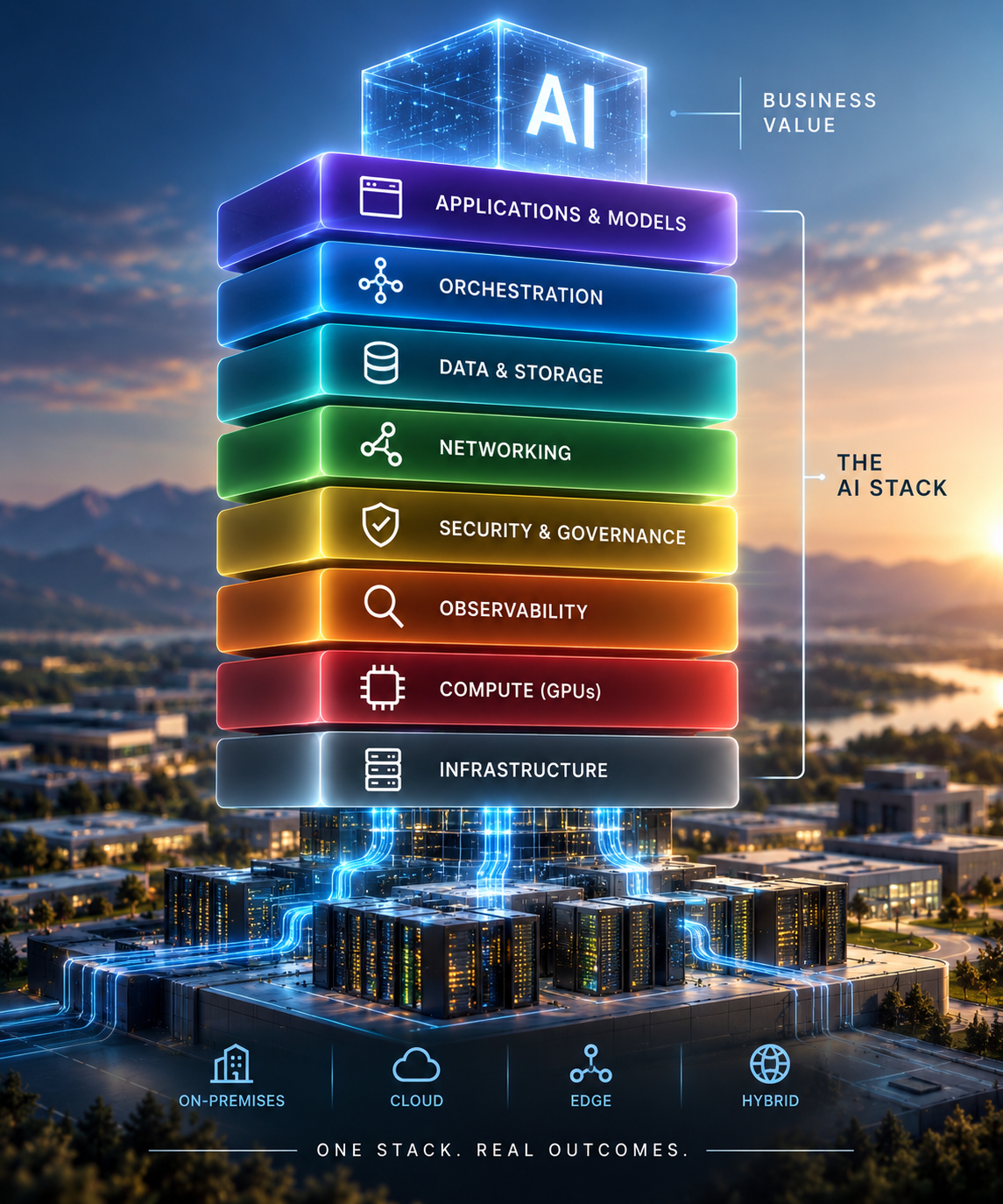
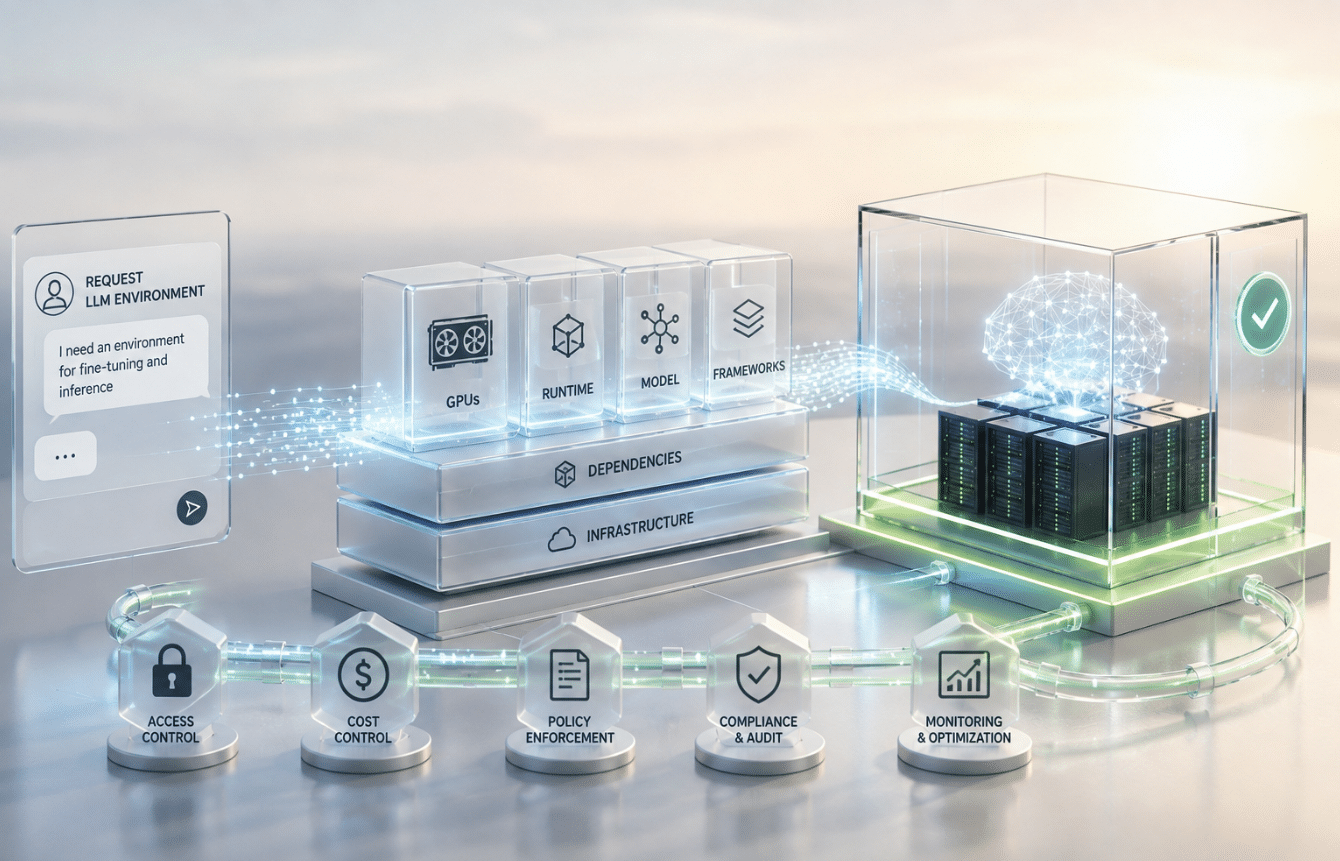
This is the use case behind LLM-as-a-Service (LLMaaS): treating the entire LLM stack, GPUs, inference runtime, model weights, frameworks, and dependencies, as a single governed, self-service product instead of a pile of manual setup that someone has to redo every time. Below is the market context driving the urgency, the specific challenges teams run into, and how Torque turns LLMaaS from a slide in a deck into something a developer can actually click a button and get.
The market is moving faster than most teams’ operating model
The numbers explain the pressure. Enterprise investment in LLMs is compounding quickly, and the infrastructure underneath it hasn’t caught up.
| Metric | Figure | Source |
|---|---|---|
| Enterprise LLM market size, 2025 | $4.84B–$8.8B (estimates vary by scope) | Fortune Business Insights, Index.dev / GM Insights |
| Projected market size by 2034 | $48.25B–$71.1B | Fortune Business Insights, Index.dev / GM Insights |
| CAGR (2026–2034) | ~26–30% | Fortune Business Insights |
| Enterprises with deployed GenAI APIs/models by 2026 | 80%+ (up from <5% in 2023) | Gartner, via Index.dev |
| Cloud as the dominant deployment model | 62.2% market share (2026) | Fortune Business Insights |
| Companies planning to increase LLM investment | 72% | Index.dev |
| LLM API spend growth, late 2024 to mid-2025 | More than doubled, to $8.4B | CloudNuro |
Two things stand out. First, this is not a niche workload anymore, it’s approaching default enterprise infrastructure, with cloud as the primary delivery model, which is exactly the kind of workload platform teams are supposed to standardize and govern. Second, spend is scaling faster than most organizations’ ability to track it, let alone control it.
And underneath the adoption headline is a less flattering number: only 36% of organizations report having scaled generative AI beyond pilots, and just 13% see enterprise-wide impact from it, according to research cited by Index.dev. Most companies aren’t struggling to try LLMs. They’re struggling to operationalize them.
Why LLM operations break down in practice
Talk to any platform, DevOps, or MLOps team six months into an LLM rollout and the same set of problems comes up. None of them are about the model itself, they’re about everything required to run it reliably and safely.
| Challenge | What it looks like | Evidence |
|---|---|---|
| Manual, drift-prone environments | GPU layer, runtime, model weights, and dependencies assembled by hand for each stage; training and production environments quietly diverge | Common root cause of “works in dev, breaks in prod” for LLM workloads |
| Runaway, unattributed cost | GPU spend spikes with no early warning; environments sit idle after use; nobody can say which team or model is driving the bill | 78% of AI teams report LLM API expenses exceeded first-year projections; inference alone consumes ~85% of AI budgets on average; only 34% of enterprises have mature AI cost-management practices (CloudNuro) |
| Shadow AI / ungoverned deployment | Teams stand up models and inference endpoints outside sanctioned tooling because self-service isn’t available any other way | 91% of AI tools in enterprise environments operate outside IT control, averaging 269 shadow AI apps per 1,000 employees; only 37% of organizations have any policy to manage or detect shadow AI (Cloud Security Alliance) |
| Security and compliance exposure | Ungoverned models and endpoints become an unmonitored attack surface | 1 in 5 organizations has had a breach involving shadow AI, costing $670K more on average than a typical breach; mean time to identify such a breach is 247 days (CSA); Gartner projects 40% of enterprises will hit a shadow AI–related security or compliance incident by 2030 |
| The pilot-to-production gap | Proof-of-concept works; production rollout stalls because it can’t be reproduced reliably or scaled safely | Only 36% of orgs report scaled GenAI deployment; only 13% see enterprise-wide impact (Index.dev) |
| Skills and process gap | Data scientists and app teams need infrastructure they can’t build themselves; central platform teams can’t keep up with every request | Only 30% of senior technologists feel well-prepared for AI workloads (Index.dev) |
Put together, this is a familiar pattern to anyone who’s lived through the early days of cloud or Kubernetes adoption: powerful new technology, real business pressure to move fast, and no governed, self-service way to deliver it, so people build around the platform team instead of through it. The result is cost sprawl, inconsistent environments, and risk that nobody can see until it’s already a problem.
How Quali Torque solves the LLMaaS use case
This is exactly the gap LLM-as-a-Service on Torque is built to close: the complete LLM stack, defined once as a governed blueprint, delivered identically every time, without requiring the requester to understand the infrastructure underneath it.
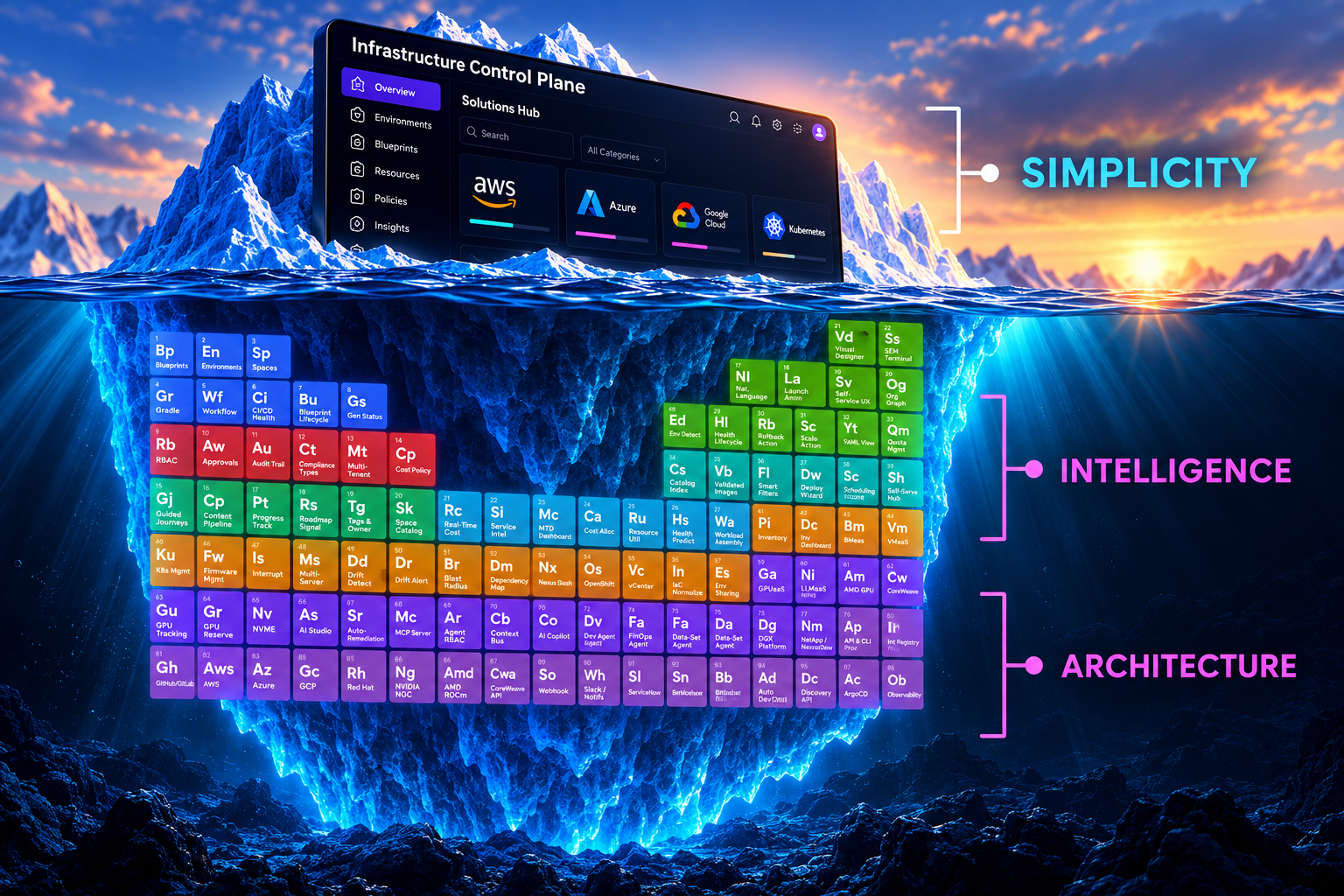
- One blueprint, the whole stack. Instead of assembling GPU resources, an inference runtime, model weights, and frameworks by hand for every request, Torque versions the entire stack together as a single Environment as Code blueprint, built from your existing Terraform, Helm, CloudFormation, and Kubernetes assets. What used to take hours of manual assembly, and drift a little more with every repetition, is provisioned in minutes, the same way every time.
- Self-service without the tribal knowledge. Data scientists, application teams, and developers can request an LLM environment in plain language, without needing to know which GPU SKU, runtime version, or model artifact to specify. Torque’s AI-assisted blueprint design turns that request into a ready-to-launch environment, so the platform team isn’t a bottleneck and the requester isn’t guessing.
- Training and production, guaranteed identical. Because both stages are provisioned from the same blueprint, “it worked in dev” stops being a coin flip. Reproducibility is enforced by the blueprint itself, not by someone’s documentation.
- Cost controlled before the model ever runs. Torque enforces spend limits and resource policies pre-launch rather than discovering the overrun on next month’s bill, and environments are tagged automatically by owner, team, model, and business purpose. That directly targets the two numbers above: the 78% of teams that blow past their first-year LLM budget, and the 85% of AI spend that inference quietly consumes. Idle inference environments and configuration drift are flagged continuously, not caught in a quarterly audit.
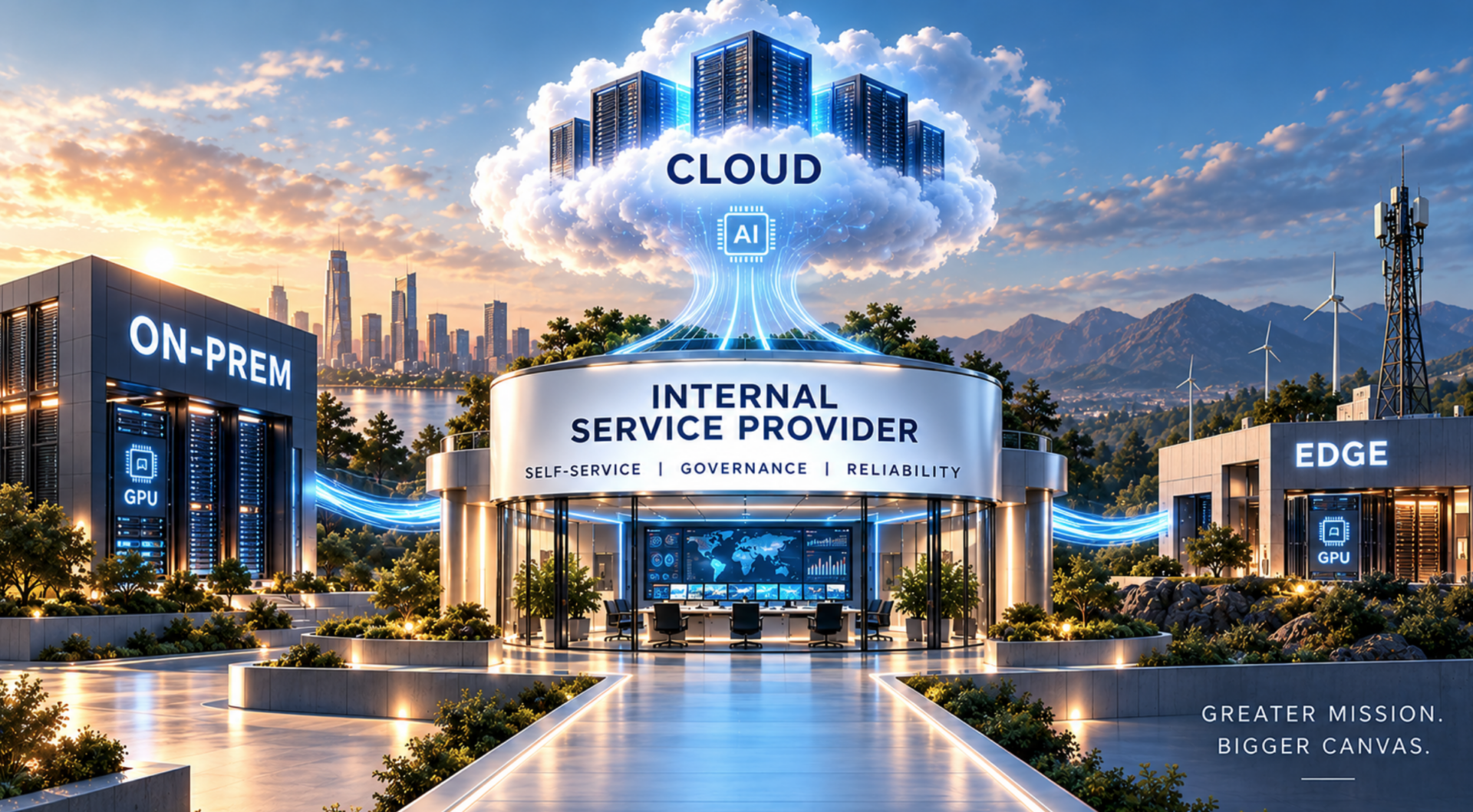
- Governance that doesn’t slow people down. Centralized credential management, role-based access, and customizable policies on resources, configuration, and spend mean self-service doesn’t have to mean ungoverned. Every environment change is tracked, versioned, and auditable, and can be rolled back, which is the direct answer to the shadow AI problem: give teams a fast, sanctioned path, and they stop building an unsanctioned one.
Built for the stack you already run. LLMaaS on Torque supports the ecosystem enterprises are actually standardizing on:
| Layer | Supported |
|---|---|
| Models & runtimes | NVIDIA NIM, NeMo, LLaMA, Mistral |
| Infrastructure | AWS, Azure, GCP, VMware |
| Orchestration | Kubernetes, GPU platforms |
| Automation | REST API, CLI |
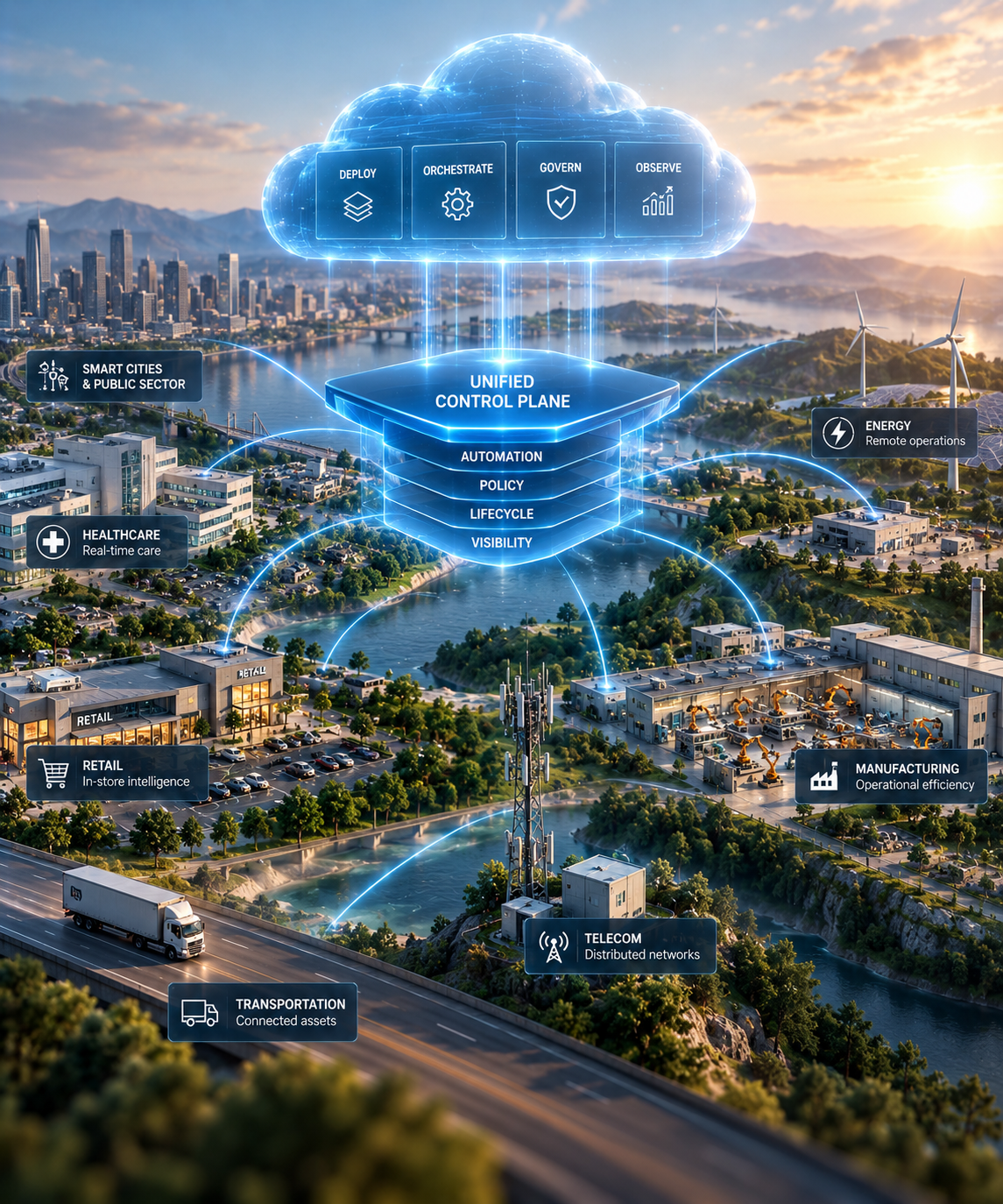
None of this requires ripping out existing IaC. Torque orchestrates the Terraform, Helm, and CloudFormation you already have into a governed, reusable blueprint, it’s a control and delivery layer on top of your stack, not a replacement for it.
The net effect
The market data says LLM adoption is no longer optional and the spend curve is steep. The challenge data says most organizations are managing that spend, and that risk, with manual processes and incomplete visibility, which is exactly why only a third of them have scaled past the pilot stage. LLM-as-a-Service closes that gap by making “governed” and “self-service” the same thing instead of a tradeoff: teams get LLM environments in minutes, platform and security teams get consistency, cost control, and an audit trail, and the business gets to actually realize the return it budgeted for.
See it in action: watch the demo, try it yourself in the Torque Playground, or book time with our team to talk through your specific LLM environment, all available on the LLMaaS page.
Sources
- Fortune Business Insights — Enterprise LLM Market Size, Share & Growth
- Index.dev — 50+ LLM Enterprise Adoption Statistics in 2026
- CloudNuro — LLM Cost Management: The 2026 Enterprise Buyer’s Guide
- Cloud Security Alliance — The Invisible Enterprise: Shadow AI and the Ungoverned Frontier
- Quali — LLM as a Service (LLMaaS)
- Quali — AI Infrastructure Orchestration
- Quali Torque Docs — Environment as Code Overview