Lior Koriat, CEO Quali
On June 3rd I was privileged to be at Cisco Live! in Vegas, when Stack Automation by Quali was announced. I then spent three days watching what it unlocked.
Kevin Wollenweber, SVP and General Manager of Cisco Data Center and Internet Infrastructure, described what we built as bringing “deployment expertise and automation” to Cisco’s AI infrastructure story. Jeremy Foster, SVP and General Manager of Cisco Compute, called out the 12-week deployment problem on the center stage of the show floor, and said Stack Automation is where they landed to solve it. Tom Gillis, General Manager of Cisco Infrastructure and Security, referenced Stack Automation in his Day 2 keynote as part of the platform-level automation story Cisco is building for the AI era.
Three different sessions, three senior leaders, the same problem named the same way.
When a message lands that consistently across an organization as large and distributed as Cisco, it means the conviction runs deeper than the launch.
The problem that everyone has but no one names clearly
Here is what the deployment reality looks like for most enterprises right now. You have bought the GPUs. You have the executive sponsorship. You have a use case that can justify the investment. And then the clock starts running, and it does not stop for weeks.
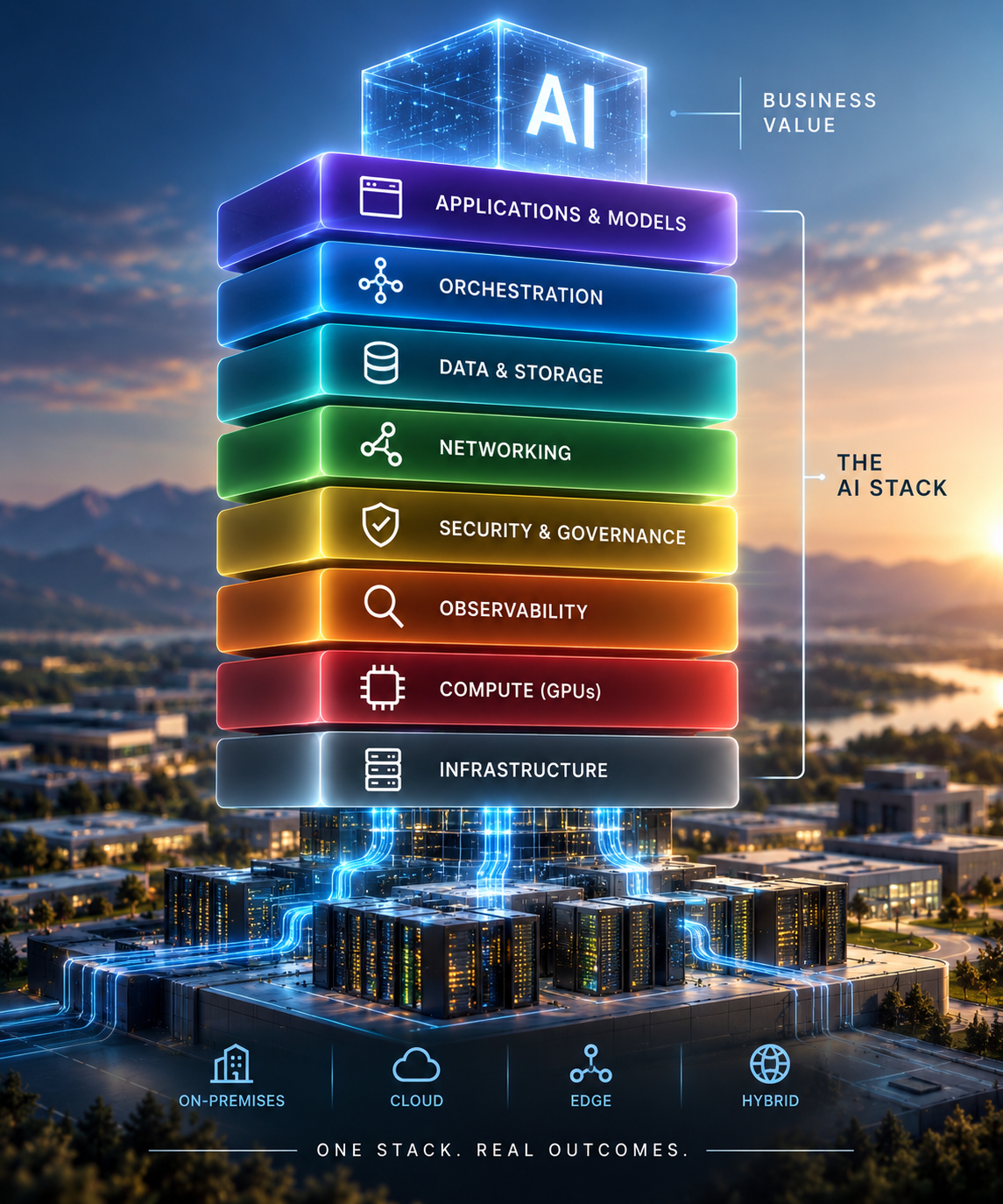
Deploying a production AI environment is not just provisioning a server. It means orchestrating accelerated compute, networking, storage, software layers, AI frameworks, third-party tooling, security, and observability, and bringing all of it together in a way that is validated, repeatable, and production-grade. When you are doing that manually, with multiple vendor engagements, fragmented tooling, and no unified workflow, weeks becomes the floor, not the ceiling.
Jeremy Foster described the Cisco side of that reality in his published blog: customers are “twelve, fourteen, sometimes sixteen weeks into their AI project, stitching together infrastructure and software stacks by hand.” The number is not an exaggeration. It is the median reality we have seen across the enterprises we work with.
But slow activation is only half the problem. Even after an AI factory is stood up, the economics rarely work the way they should. GPU clusters sit pre-allocated and underutilized, reserved for peak workloads that never fully materialize, while cost per token stays stubbornly high and the business case for the investment erodes. The real measure of an AI factory is not whether it can run a workload. It is whether it can run the right workload, on demand, at the right utilization level, at a cost the business can justify.
Stack Automation was built for both problems: getting to production fast, and keeping production economically efficient once you are there.
What we actually built
Stack Automation by Quali is a deployment automation platform co-engineered with Cisco. It is available exclusively through Cisco and the Cisco partner network. General availability is August 2026.
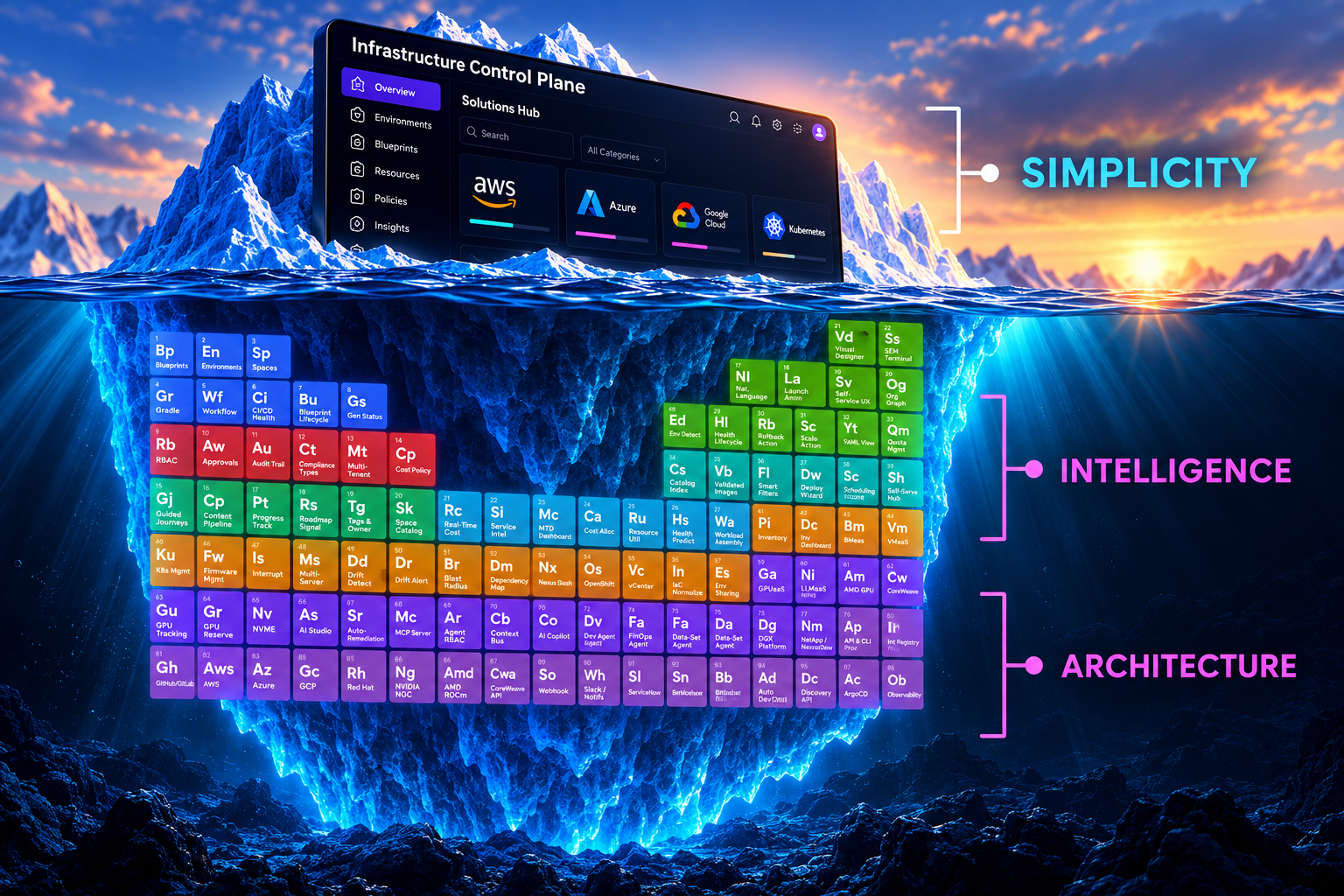
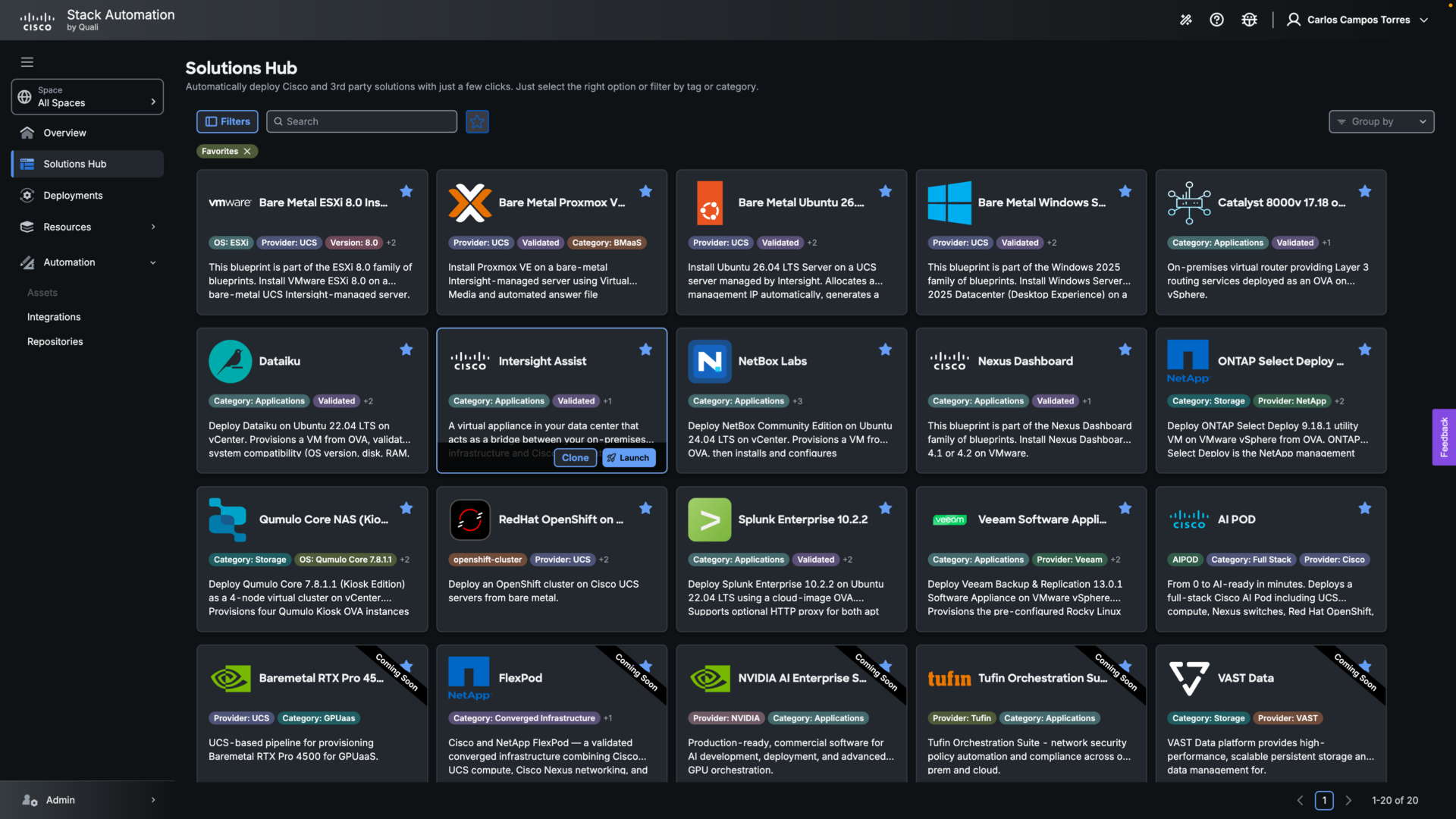
The mechanism is straightforward. We encode everything required to stand up a production-ready AI environment, compute configuration, networking, storage, Cisco Validated Designs, AI tooling, software layers, security, and observability, into a blueprint. That blueprint is deployable in a few clicks. The same environment that used to require weeks of manual assembly can be stood up in hours.
Carlos Campos Torres , Cisco’s Director of Compute Product Management, demonstrated this live on the show floor. His description of what Stack Automation does was the most precise I heard all week: “a fully automated experience that emulates the cloud for Cisco and third-party solutions. All the smart defaults come embedded. Think of all the Cisco Validated Design best practices, things that previously only someone deep in IT knew about. Now that’s embedded in a single blueprint experience that anyone can use to deploy anything.”
“Anyone can use” matters more than the speed claim. The deployment problem is not just that it takes too long. It is that it requires specialist knowledge that most enterprises do not have at scale. When that knowledge lives in one senior engineer, you have a bottleneck that no amount of hardware investment can eliminate. When it lives in a blueprint, you have changed the operational model entirely.
What that means in practice: physical infrastructure including compute, networking, and storage, validated against Cisco’s reference architectures with automated pre-deployment hardware checks. Cisco software including Nexus Dashboard, Intersight, Catalyst Center, ISE, and Splunk, provisioned and configured automatically using Cisco Validated Designs as the baseline. Third-party and ISV applications including OpenShift, NVIDIA NIMs, Qumulo, and Veeam, all deployable from the same unified workflow, all pre-validated for compatibility. And security and observability embedded from the start, not added after the fact as an afterthought.
Why this only works as a Cisco partnership
I want to be direct about what this partnership represents, because I think it matters beyond the product announcement itself.
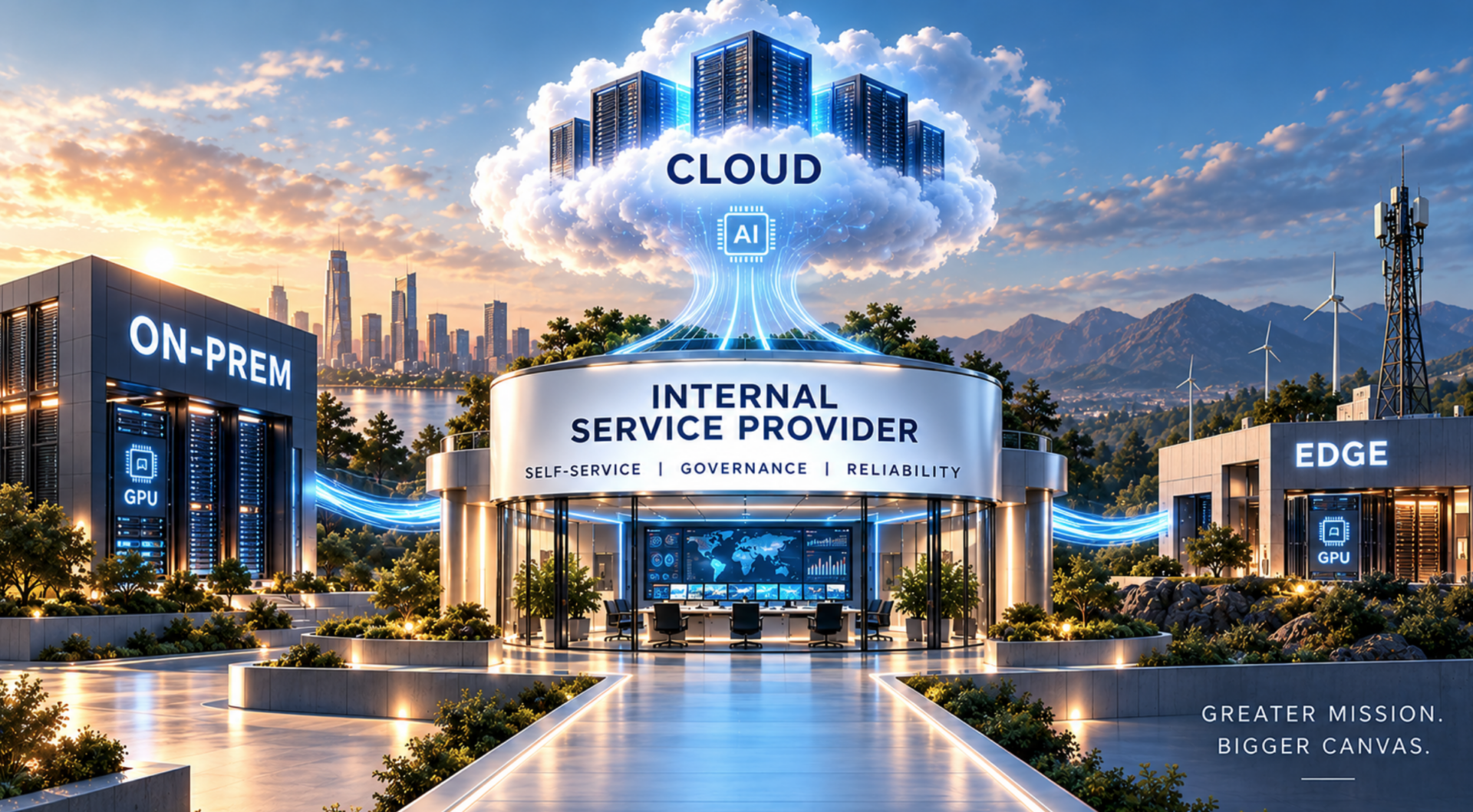
For years, enterprise IT has faced a structural tradeoff: the velocity of cloud deployment, or the trust and control of on-premises infrastructure. Stack Automation was built to end that tradeoff.
Cisco brings the infrastructure depth. The Cisco Validated Designs that are embedded in Stack Automation blueprints represent decades of accumulated knowledge about how to configure Cisco compute, networking, and storage correctly for production workloads. That is not documentation. It is operational expertise encoded as automation. We did not replicate that. We built on top of it.
Quali brings the automation layer and the deployment intelligence. We have spent years building the capability to take heterogeneous infrastructure, including hardware, software, third-party tools, and ISV applications, and turn it into governed, repeatable, self-service environments. That is what we do. That is what Torque, our infrastructure automation platform, is built to do at enterprise scale.
What Stack Automation does is apply that capability specifically to the Cisco AI infrastructure stack. The result is something neither company would have produced independently: a deployment experience that is as fast as cloud provisioning, grounded in Cisco’s validated architecture standards, and extensible enough to include whatever ISV application layer the customer needs on top.
There is a third constituency worth naming: the partner ecosystem. Managed service providers have long been constrained by what human operators can monitor and act on across a complex customer estate. When automation is grounded in true infrastructure state and agentic operations can derive intent from what is actually running in production, partners can deliver a category of managed service that simply was not possible before. That is one of the most significant go-to-market opportunities the Stack Automation platform enables.
The Cisco Cloud Control integration is the detail worth paying attention to
Most of the coverage of Stack Automation has focused on the deployment speed story, and that is correct. But there is a second thing that Jeremy Foster said on stage that I think deserves more attention.
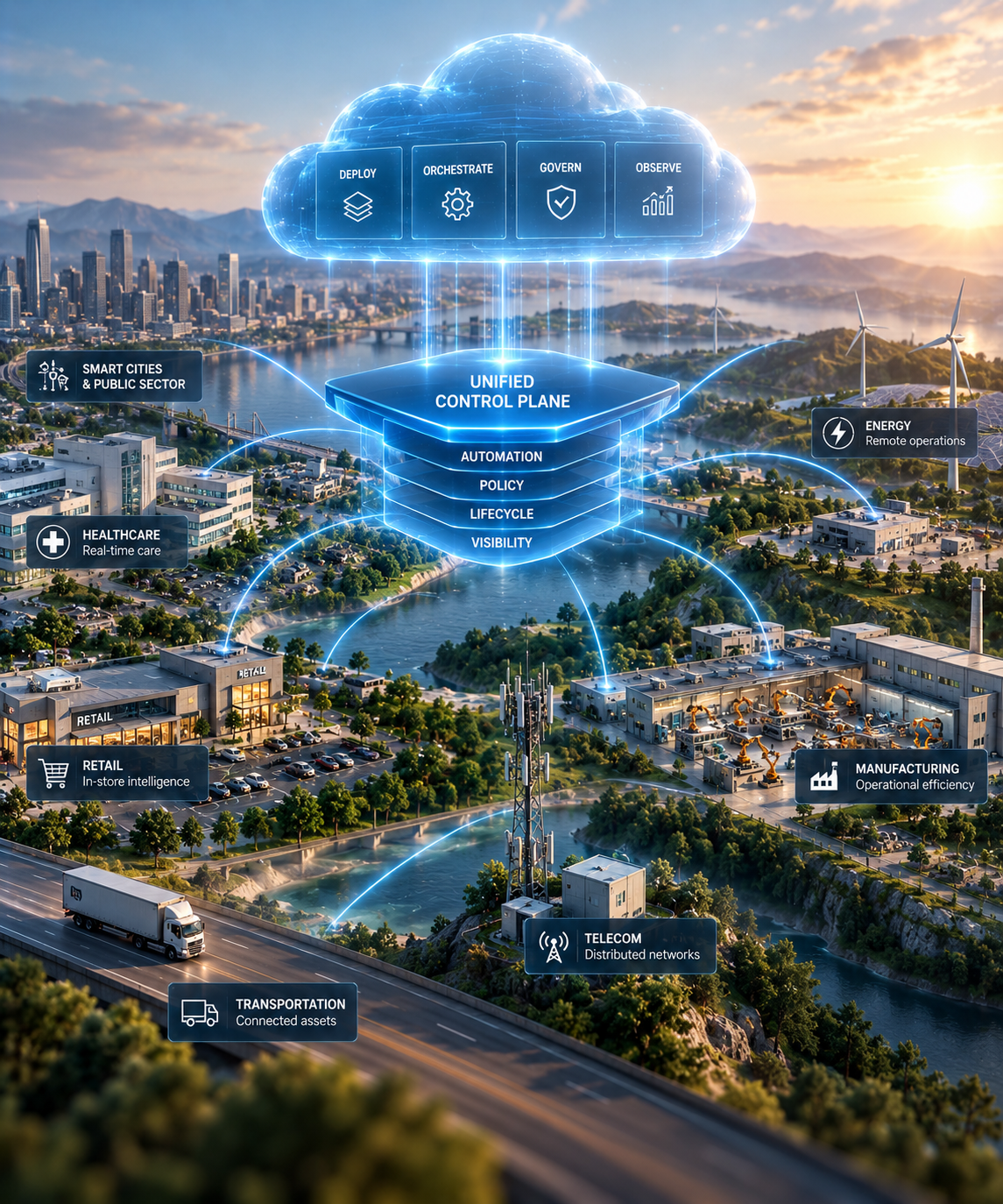
He said Stack Automation will be tied directly into Cisco Cloud Control. Cisco Cloud Control is the unified management platform Cisco is building for the AI era. One login, one inventory, one agentic workspace across the entire Cisco portfolio. It is where Cisco customers will manage their AI infrastructure going forward.
Embedding Stack Automation into Cloud Control means that deployment automation is not a separate workflow that IT teams run before they get to the real platform. It is part of the platform itself. You will be able to initiate a full-stack AI environment deployment from the same interface you use to observe, manage, and secure it afterward.
Carlos also confirmed the roadmap step that follows: three months after general availability, full-stack converged bundles, FlexPods, AI pods, Splunk pods, will be available so that when hardware is powered on, the stack self-configures. The deployment process becomes the power-on process.
But the Cloud Control integration is about more than deployment speed. It is what ensures the infrastructure those Cloud Control agents are managing was stood up correctly, consistently, and in accordance with Cisco’s validated standards in the first place. You cannot have reliable agentic operations on top of an environment that was assembled by hand. Stack Automation is what makes the foundation trustworthy enough for Cloud Control to act on it.
What the token factory conversation gets right
At Cisco Live, Marty Jain, from NVIDIA and Josh Matthews from Cisco introduced a frame that I found genuinely useful: the data center as a token factory.
The argument is this. Every enterprise is going to be running AI agents. Agents do not consume tokens the way chatbots do, a question asked, an answer returned. Agents run continuously. They call tools, move data, spawn sub-agents, and generate compute load that is orders of magnitude higher than anything we have built IT infrastructure for before. The data center that runs those agents is producing tokens the way a factory produces goods. The economics of that factory are determined by utilization, throughput, and the cost of standing the factory up.
Stack Automation is relevant to two of those three variables.
- It dramatically reduces the cost of standing the factory up and keeping it running. It also governs what runs in that factory afterward: policy enforcement, environment lifecycle, access controls, and repeatable provisioning for every new workload. The token factory does not run efficiently if every new model deployment or tenant onboarding requires another manual setup cycle.
- It also improves utilization. GPUs that are sitting idle while infrastructure is being manually configured are not generating any return on a very significant capital investment. Time-to-production is time-to-utilization. Faster deployment means earlier return.
Charlie Meyers, CTO of Monumental Sports and Entertainment, made the on-premises economics case clearly from the stage: the cloud migration taught enterprises that what looks cheaper in the cloud often is not when utilization is continuous and unpredictable. Token economics for agentic AI will expose the same lesson. On-premises AI infrastructure, deployed fast and operated efficiently, is the answer for enterprises running sustained AI workloads. Stack Automation is the deployment layer that makes that operationally viable.
What general availability in August means
August 2026. Any Cisco customer can sign-up and begin deploying AI applications on their existing Cisco infrastructure.
For Cisco’s partner channel, this is significant. Every Cisco partner that is having conversations about AI infrastructure with enterprise customers now has a deployment automation answer that is native to the Cisco portfolio, validated against Cisco’s architecture standards, and available as part of the standard Cisco customer experience.
The deployment problem has been one of the most consistent reasons AI infrastructure conversations stall between the hardware sale and production deployment. That friction does not go away on its own. It gets solved by making the deployment process itself a product.
That is what Stack Automation by Quali is. A product that makes deployment the easy part.
A note on what this partnership means
Building something with Cisco is not the same as selling to Cisco or integrating with Cisco. We co-engineered this. We spent real time understanding what Cisco’s customers actually run into in the field. We built automation that encodes Cisco’s architectural knowledge, not generic infrastructure patterns.
The result is a platform that Cisco’s own senior leadership is putting on stage at their largest annual event and using as a load-bearing element of their AI infrastructure narrative.
Kevin Wollenweber said it directly: Quali brings “deployment expertise and automation.” That is the right description. And it is the kind of description that only gets used when the work behind it has already proven itself.
The next phase is general availability. If you are a Cisco partner or customer thinking about what your AI infrastructure deployment practice looks like at scale, I would like to talk.
Stack Automation by Quali is available exclusively through Cisco and the Cisco partner network. General availability: August 2026.
Watch the Cisco Live sessions: Day 1 — Jeremy Foster / NVIDIA Center Stage: https://www.youtube.com/live/rUqKylmxaEM?si=IGn8mJXYwvhbf1kp&t=7733 Day 1 — Kevin Wollenweber session: https://www.youtube.com/live/rUqKylmxaEM?si=AKNiOQI5Ly7QaBo8&t=7973 Day 2 — Tom Gillis keynote: https://www.youtube.com/live/tb-gSplngk4?t=16525s
To understand how Stack Automation can solve your AI Stack challenges visit the Cisco Stack Automation page or the Quali Stack Automation page.