Claude, Cursor, Copilot, pick your assistant, can create and spin up a Terraform module or a Kubernetes manifest in the time it takes to read this sentence. It’s genuinely useful.
But there’s a catch and it’s a big one. Generating infrastructure-as-code and operating infrastructure at enterprise scale are two completely different things. Most AI-accelerated infrastructure projects don’t stall because the AI writes bad code. They stall right after the code works, when someone has to answer “okay, can we run this reliably, securely, and the same way every time?” This question is just one of many that need to be asked. Many issues can and do occur using AI to develop code, that have little to do with “did it work?”.
A conversation motivated by a previous blog on autonomous infrastructure revealed a serious blindness in what is safe or not safe when using AI to contribute to infrastructure management. A readers feedback saying, he would never allow autonomous agentry to manage his business infrastructure but is perfectly happy to use AI to create terraform files to deliver it. The argument revolved around trust. True autonomous agents would make decisions without the need for a human whereas code written by AI would still need human involvement.
Six example issues of using AI to write Terraform code on its own, no governing layer:
- Scale: A script that works for one engineer doesn’t hold up across a whole org; it forks into a dozen slightly different variants instead of reusing cleanly.
- Change: Nobody owns updates, drift, or teardown after the initial script runs; lifecycle management gets skipped.
- Security: AI reflects the prompt it was given, not your security baseline, so policy only holds if every author remembers to apply it every time.
- Cost: Anything trivial to spin up is just as trivial to leave running, with no built-in visibility into what’s costing what.
- Access: No safe way for developers or AI agents to self-serve infrastructure without either filing a ticket or getting unchecked access to production.
- Skill mismatch: AI can generate code using patterns, providers, or techniques that are more advanced than what the team maintaining it actually knows, so when it breaks, nobody on staff can confidently debug or safely modify it.
This is where a governed operating model has to sit between AI acceleration and infrastructure execution. We call it the control plane, and below is what it actually does, backed by a real deployment story, including a real moment where an AI proposed a fix and a human had to sign off first.
AI Is Fast. Fast Was Never the Hard Part.
Every platform team right now is using AI to write provisioning scripts, Terraform, Kubernetes manifests, CI/CD pipelines faster. What used to take a senior engineer a day now takes an assistant minutes. Great.
But speed of writing code was never what made infrastructure hard. The hard part is everything that happens after the first script runs:
| Problem | What actually goes wrong |
| Reusability | A script that works once for one engineer isn’t an environment definition the whole org can reuse, it just drifts into a dozen slightly different forks. |
| Security & policy | AI reflects the prompt it was given, not your security baseline. No governing layer means policy only holds if every author remembers to apply it, every time. |
| Variation | Different regions, compliance regimes, and scale needs are normal. Without structure, that variation turns into unmaintainable forked code. |
| Lifecycle | Someone has to own provisioning, updates, and teardown for the life of the environment, not just the moment it’s created. |
| Cost control | Anything trivial to spin up is just as trivial to leave running. Speed without cost governance is its own risk. |
| Safe self-service | Developers and AI agents both need to request infrastructure without waiting on tickets orgetting unchecked production access. |
None of this gets fixed by a better code-generation model. It takes an operating layer built specifically to standardize, govern, and manage whatever AI, or anyone, produces.
Enter the Control Plane
This is where Torque, with Stack Automation, sits: between the AI acceleration layer and the infrastructure execution layer.
<p align=”center”> <img src=”control-plane-diagram.png” alt=”AI Assistants generate code, which flows into the Torque control plane for standardization and governance, before provisioning infrastructure across cloud, on-prem, hybrid, edge, Kubernetes, and GPU environments” width=”700″> </p>
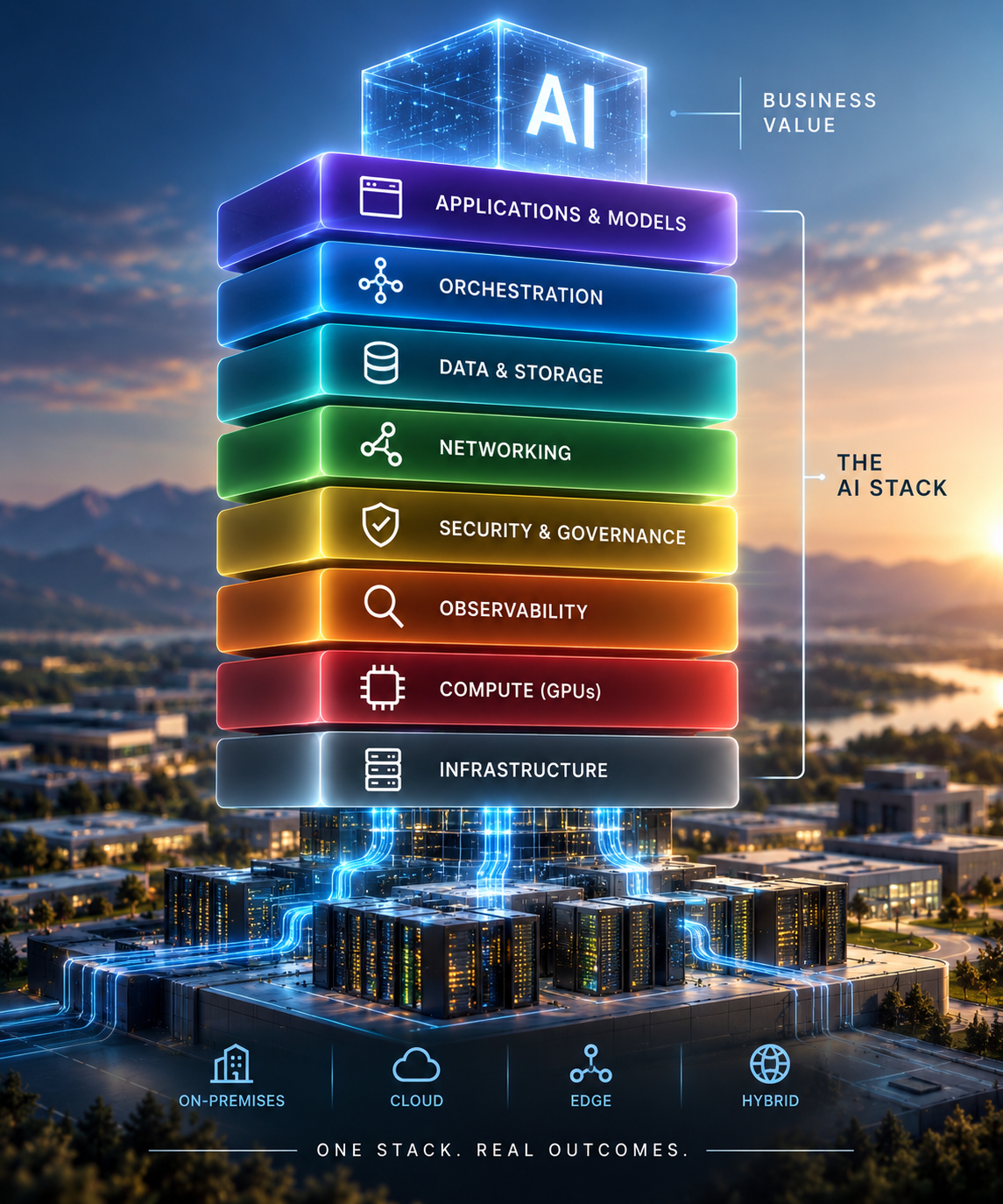
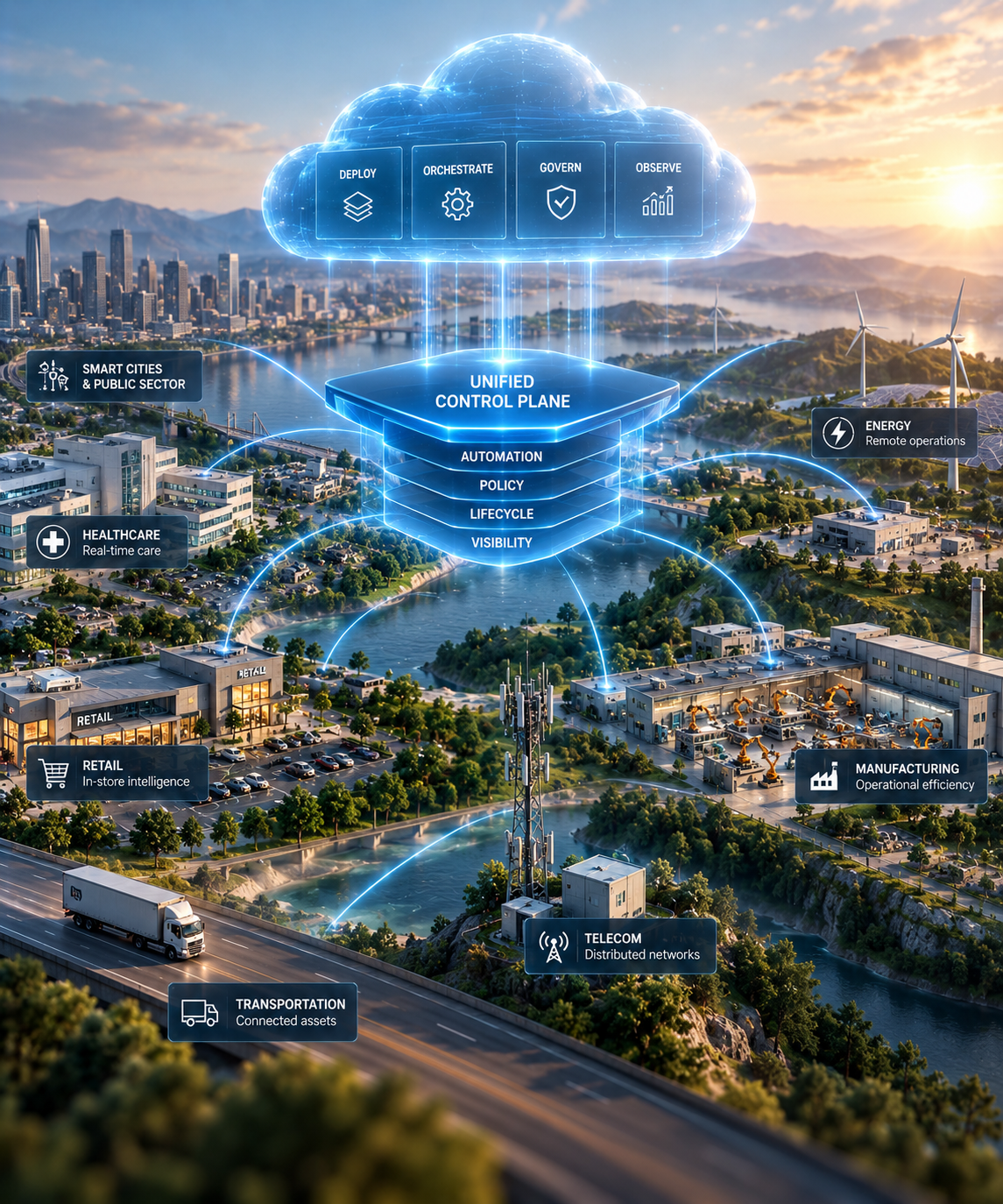
AI helps create or improve the automation. Torque standardizes it, governs it, exposes it through self-service, manages its lifecycle, and gives you one control plane across cloud, on-prem, hybrid, edge, Kubernetes, GPU, and AI workloads.
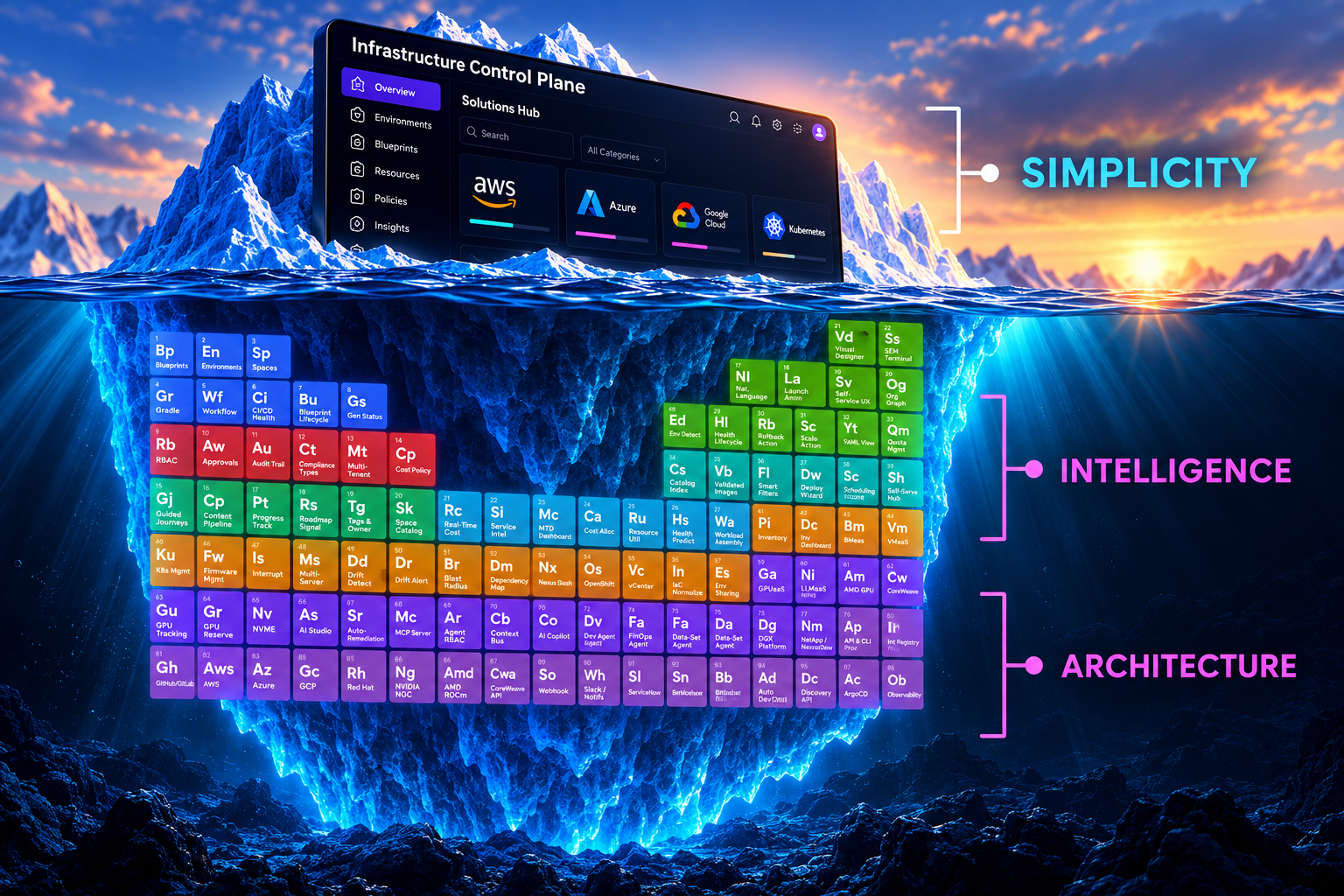
In practice: infrastructure, platform, and application items live in one shared catalog, callable by any authorized user, or by an AI agent acting on their behalf. Instead of requesting a single resource, someone requests a whole environment: pick a target cluster, set a duration, and Stack Automation handles compute, network, and storage across public cloud, on-prem, or a hybrid mix. A multi-step manual build that used to need separate automation for every layer becomes one governed request.
Proof in Practice: AI Accelerates, the Platform Governs
Here’s the part that isn’t a slide, it actually happened.
In a recent platform demo, someone asked an AI copilot, in plain language, to provision a web server for testing. The copilot found a matching blueprint already in the catalog, went to deploy it, and in the process caught something: the blueprint itself was misconfigured.
It didn’t just quietly patch it. The copilot proposed a specific fix, asked the user to approve the change, and only after getting a yes did it push the corrected blueprint as a tracked pull request.
That’s the whole governance model in one sequence: AI accelerates diagnosis and remediation, but the platform makes sure the change is visible, reviewed, and auditable before it takes effect. That’s the actual gap between “AI writes infrastructure code” and “AI operates inside a governed system”, and it’s the gap enterprises are increasingly asking about as AI-generated automation moves out of demos and into production.
Self-Service, Minus the Chaos
The same copilot interface handles the questions that would otherwise mean a ticket or a manual audit: “How many GPUs are available across the lab?” comes back broken out by provider and location. “What’s running in this environment?” comes back instantly, because the platform already has the inventory.
That turns infrastructure visibility and provisioning into a conversation, for humans and AI agents alike, without pulling out the approval and audit layer underneath it.
Your Data, Your Model, Your Call
More enterprises are done routing sensitive data through third-party AI services by default. They want their data to stay in their own environment, control over which model powers their AI layer, and no ceding of business-critical information to a vendor’s infrastructure.
A control plane that spans on-prem, hybrid, and sovereign-cloud environments handles this directly. Customers choose where deployments run and which model drives the AI interface, including bringing their own model, instead of being locked into one AI provider by default. For regulated industries and sovereign-cloud initiatives, this isn’t a nice-to-have. It’s often the deciding factor.
Nobody Likes an Opaque Bill
Because environments get requested through a governed catalog instead of ad hoc scripts, the same layer enforcing policy also enforces lifecycle and cost visibility. Every environment has a defined duration, defined owner, and defined teardown path. Multi-tenant support means cost and usage get tracked per team or per customer, not buried in one aggregated number at the end of the month.
The Bottom Line
AI-generated infrastructure isn’t a fad, and enterprises are right to lean into it hard. But the ones who actually succeed will be the ones pairing AI acceleration with a governed operating model, one that standardizes what AI produces, enforces security and policy, manages the full environment lifecycle, controls cost, and gives both developers and AI agents a safe self-service path.
AI for speed. A control plane for governance. That combination is what turns AI-generated infrastructure from an impressive demo into something you can actually run in production.
To see Torque in action, visit the Torque playground, and book a live demo to see how Torque delivers AI governance and cost control to solve the challenge of governance at machine speed.