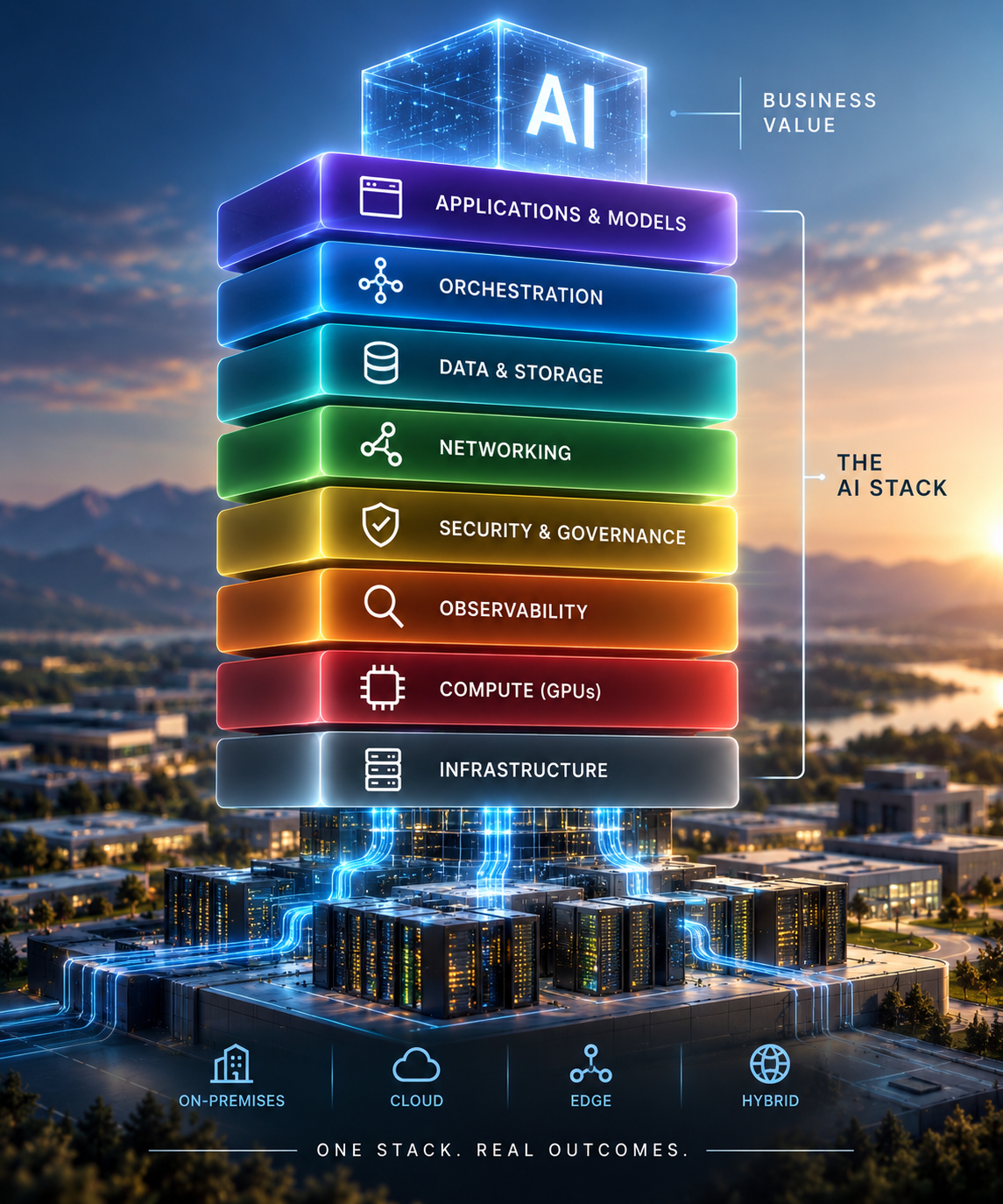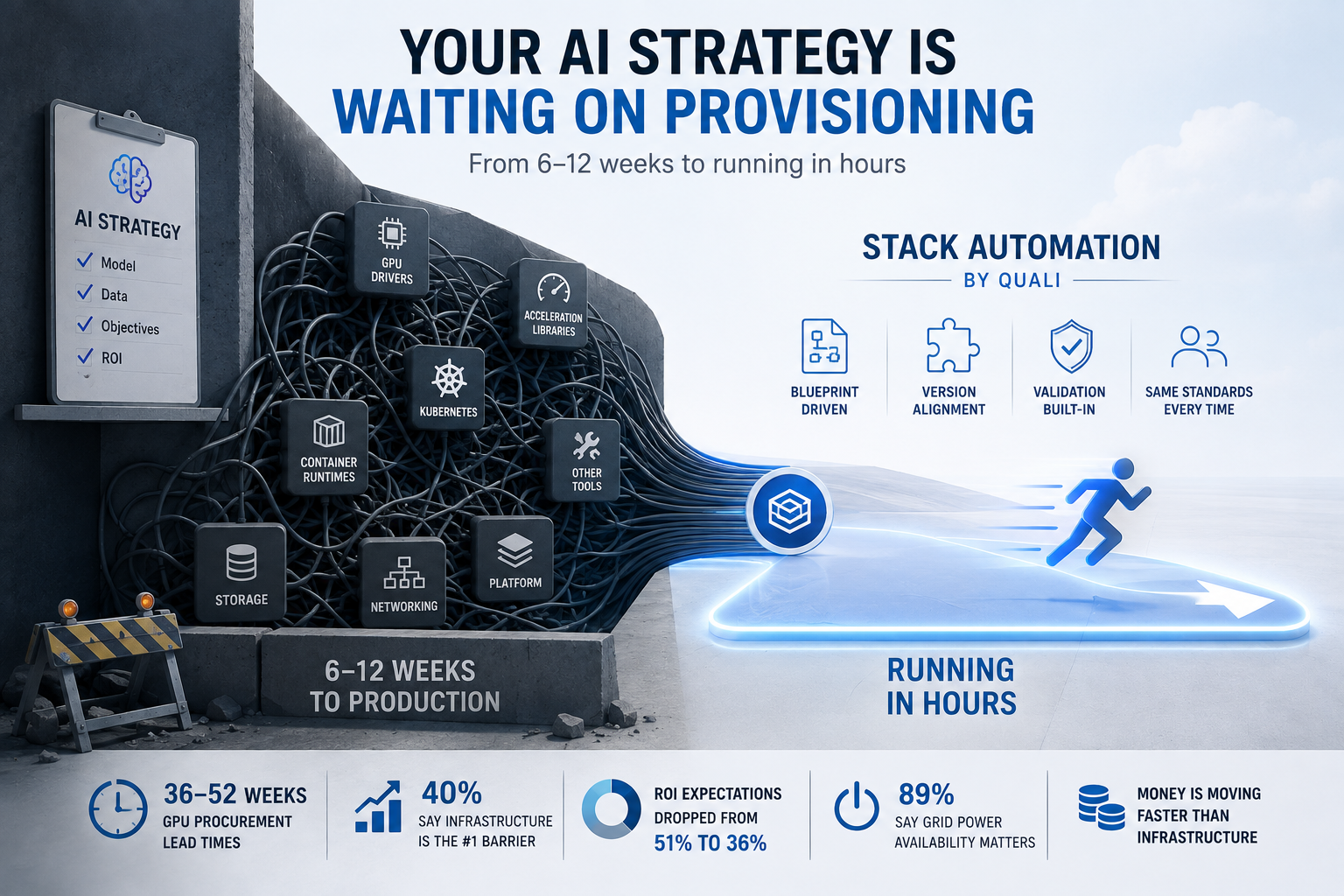
A recent blog from WWT “Your AI Strategy Is Waiting on Provisioning” put a number on something most infrastructure teams have felt for years but rarely say out loud in the boardroom: a single AI platform deployment can require aligning 25–40 tool configurations across 300–700 discrete infrastructure actions before anything actually runs. GPU drivers have to match acceleration libraries, which have to match Kubernetes versions, which have to match container runtimes, and that’s before you’ve touched storage, networking, or the platform layer sitting on top.
The AI strategy gets approved in a meeting. The infrastructure to run it shows up 6 to 12 weeks later. In a field where “we’ll circle back next quarter” might as well be “we’ll circle back never,” that gap is the strategy.
This is an industry-wide dynamic, and the numbers back it up everywhere you look.
A few data points worth sitting with:
- Enterprise GPU procurement lead times now run 36 to 52 weeks, and they’re getting longer, not shorter — driven by HBM memory producers having booked out their entire 2026 capacity and hyperscalers absorbing priority allocation ahead of everyone else. One analysis put it bluntly: “the queue is the product.” You’re not buying a GPU. You’re buying a place in line.
- Flexential’s 2026 State of AI Infrastructure report found 40% of organizations name infrastructure, not budget, not talent, as the single biggest barrier to AI expansion. 89% say grid power availability is now a factor in where and whether they deploy at all.
- Maybe the most telling number: the share of organizations expecting measurable AI ROI within a year dropped from 51% to 36% in the same report. That’s not a talent problem or a model-quality problem. That’s the timeline for actually standing up the infrastructure quietly eating the payback window.
- Industry analysts are increasingly framing this as a mismatch between capital and capability: “money is moving faster than infrastructure.” Trillions are being committed to AI infrastructure buildout while the operational muscle to turn procurement into production hasn’t caught up, one Dell-sponsored analysis called this the shift “from access to silicon to the ability to operationalize it.”
Put those together and a pattern falls out: the constraint on enterprise AI stopped being “can we get the technology” a while ago. It’s “how many manual handoffs, tribal-knowledge configs, and version-alignment landmines sit between the PO and the first successful training run.” Every handoff is a queue. Every queue is a place for drift, a driver version that’s one point release off, a config that only one engineer remembers how to set correctly, a runbook that lives in someone’s head instead of in code.
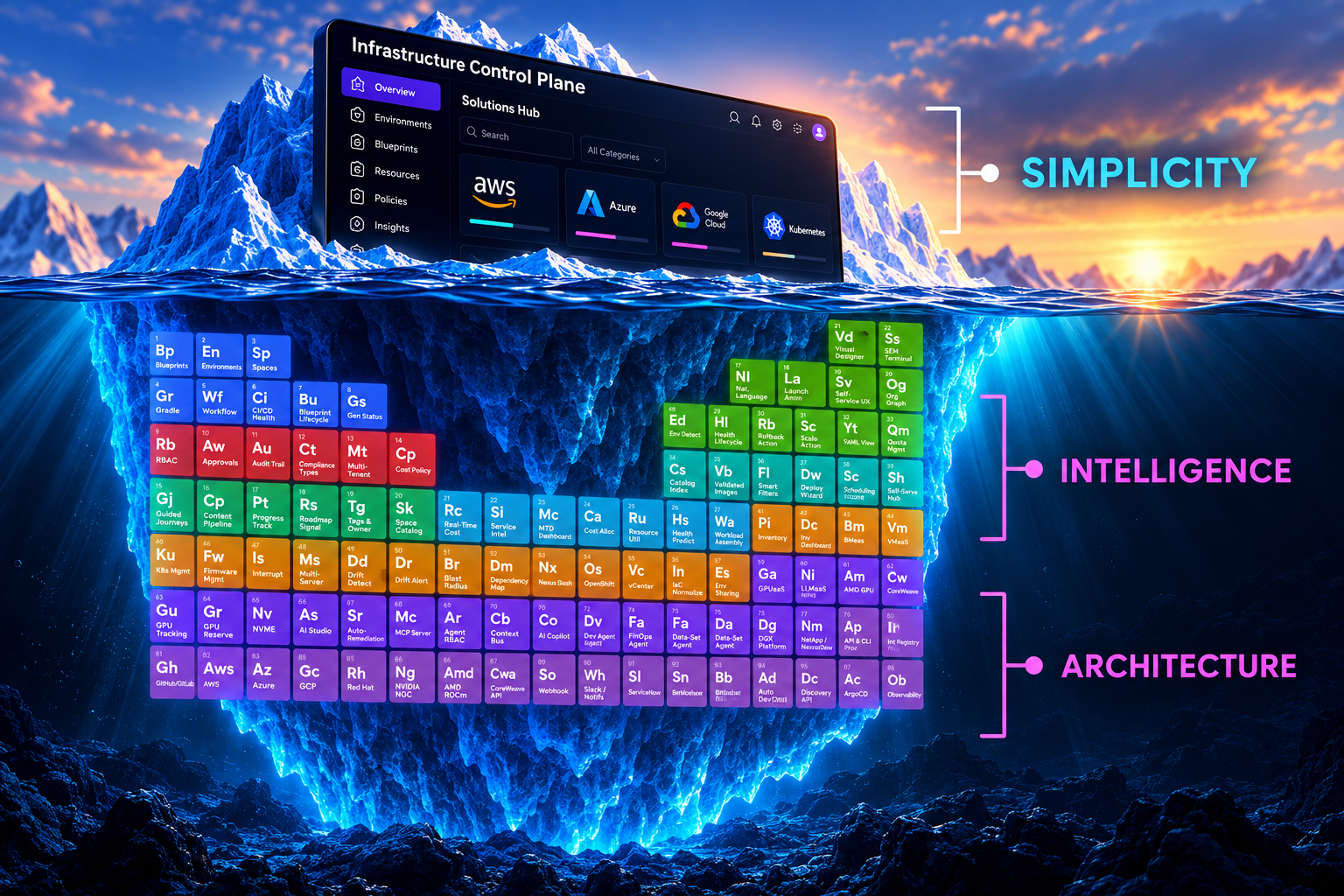
This is why the “automate the stack, not just the ticket” argument in the WWT piece resonates beyond the Cisco ecosystem. The interesting shift isn’t that provisioning is slow, everyone building infrastructure already knew that. It’s that a growing number of vendors are treating environment provisioning itself as the product surface: blueprint-driven, catalog-based, cloud-consumption-style delivery of on-prem and hybrid stacks, with the validation and version-alignment logic encoded once and reused every time instead of re-litigated by whichever engineer is on call.
There’s a line buried in the original piece worth pulling out on its own: “Automation does not replace engineering judgment. It scales it. When your best engineer’s standards are encoded into every deployment, you stop depending on who happens to be in the room.”
That’s really the whole argument in one sentence, and it’s bigger than any single vendor’s stack. As GPU lead times stretch past a year and grid power becomes a site-selection variable, the organizations that win aren’t necessarily the ones with the biggest AI budgets. They’re the ones who’ve compressed the distance between “approved” and “running”, because in a queue-constrained market, the fastest path to value isn’t buying more capacity, it’s wasting less of the capacity you already have waiting on manual handoffs.
Worth asking internally: if your AI roadmap assumes infrastructure shows up on schedule, what’s your actual number. weeks, not slides, between sign-off and first workload?
Sources: WWT — Your AI Strategy Is Waiting on Provisioning; Flexential 2026 State of AI Infrastructure Report; Axe Compute — The 52-Week Wait; Forbes Technology Council — Why AI’s Bottleneck Is Infrastructure; InformationWeek — The AI Infrastructure Bottleneck Is Becoming a CIO Problem; Forbes/Dell — From Procurement to Production
To see Stack Automation in action, download The Getting Started Guide for Stack Automation by Quali on Cisco’s website and try it out yourself for free.