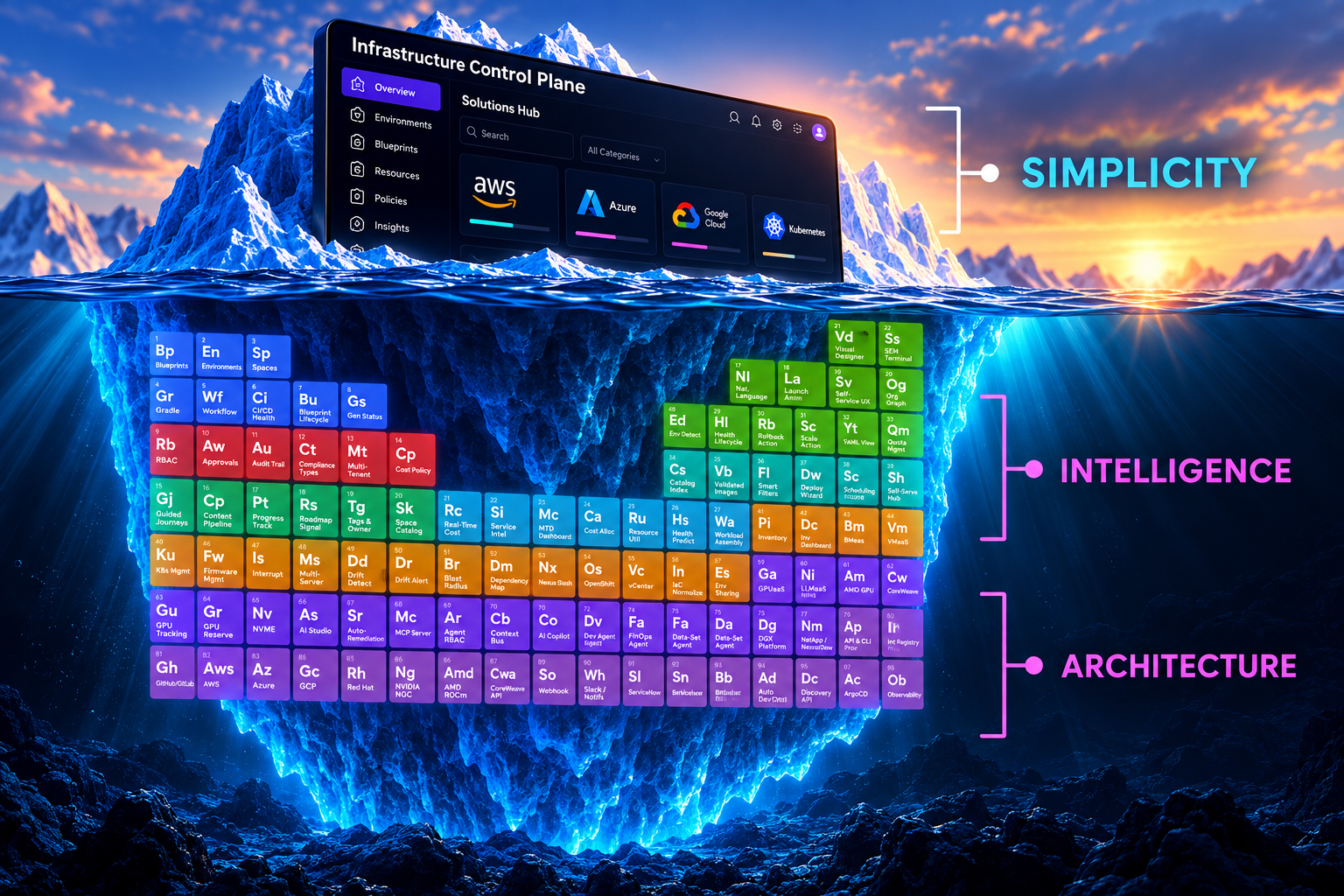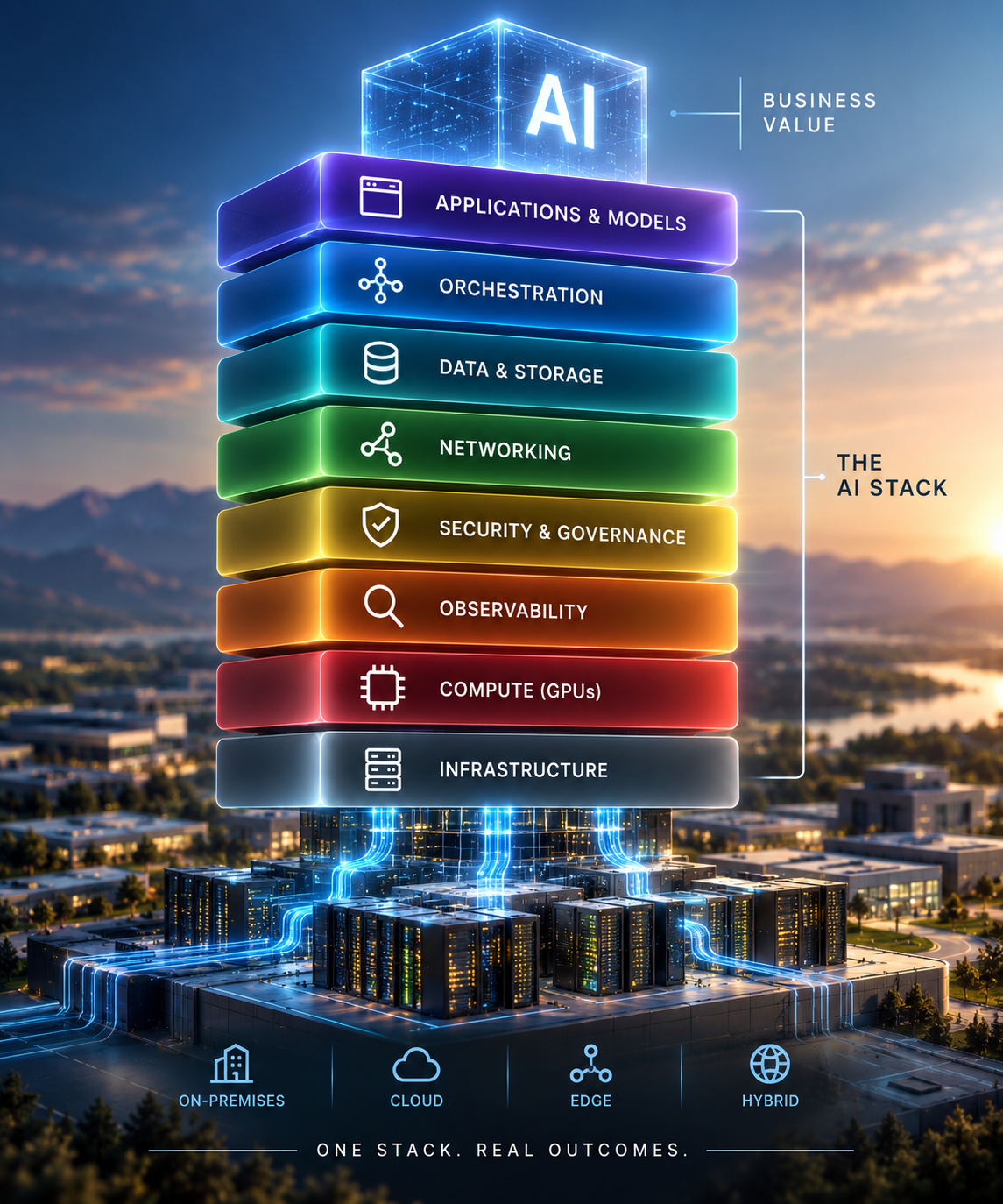
How competitive advantage is shifting from infrastructure ownership toward service delivery and distribution
Enterprises and neoclouds are building GPU capacity the way airlines buy new passenger jets: big, expensive and full of seats.
The problem is that many of these planes take off half empty, while travelers who need a seat cannot get to the empty ones. The owner carries a costly asset with poor returns, and real demand goes unmet. That is where much of today’s AI infrastructure stands, with idle GPU capacity on one side and frustrated demand on the other.
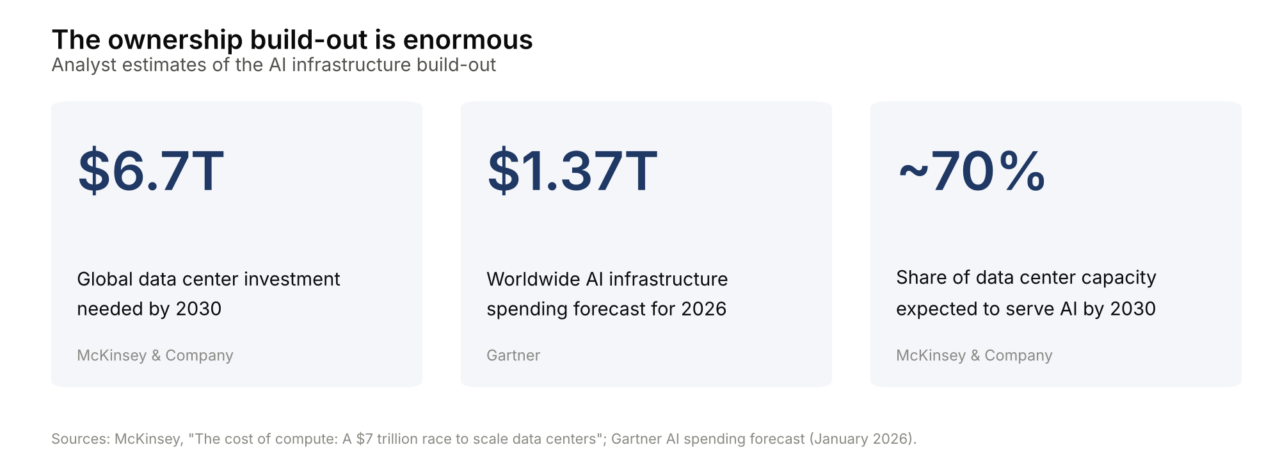
The scale of the investment makes the problem hard to ignore. McKinsey estimates that data centers will require $6.7 trillion in global investment by 2030, with roughly 70 percent of capacity expected to serve AI workloads. Gartner forecasts $1.37 trillion in AI infrastructure spending in 2026 alone. Nearly all of that capital is being deployed on the assumption that the organization that owns the asset will also find the customers to fill it.
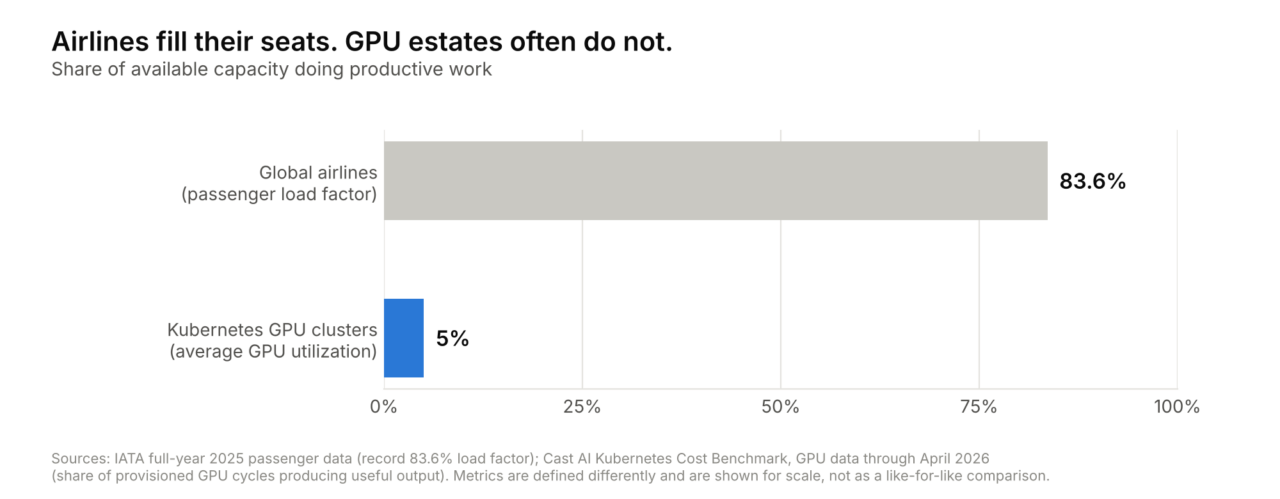
Airlines learned long ago that buying aircraft was the easy part. The global industry reached a record 83.6 percent passenger load factor in 2025, according to IATA, and it got there by building distribution as carefully as it built fleets. Codeshare agreements let one airline sell a seat on another airline’s aircraft under its own flight number. Alliances connect networks that no single carrier could build. Booking systems put every participating seat in front of every participating travel agent. The aircraft stays with its operator. The seat reaches whoever needs it.
GPU infrastructure has not yet built that layer. Cast AI’s analysis of tens of thousands of Kubernetes clusters across AWS, Azure and Google Cloud found average GPU utilization of 5 percent, measured as the share of provisioned GPU cycles producing useful output. The two metrics are defined differently, so the comparison is about scale rather than precision. The gap is still instructive.
This is the shift that will define the next phase of infrastructure competition. When capacity is abundant but hard to reach, the advantage moves to whoever can connect it to demand.
The foundations of infrastructure market power are becoming more complex
For much of the technology industry’s history, competitive advantage in infrastructure has been closely associated with ownership. Telecommunications companies invested in networks, data center operators built physical facilities and cloud providers established enormous computing estates. The ability to finance, operate and expand these assets created substantial barriers to entry and established the foundations of today’s infrastructure market.
Hyperscale cloud computing reinforced this model. Amazon Web Services, Microsoft Azure and Google Cloud demonstrated how infrastructure ownership, combined with software platforms and global distribution, could create businesses of extraordinary scale. Their advantage came not only from operating infrastructure but from translating those assets into standardized services that customers could procure and consume with relative ease.
Artificial intelligence, specialized computing, data sovereignty requirements and the growing diversity of enterprise workloads are making infrastructure demand more fragmented. Customers increasingly require capabilities distributed across locations, technologies and operators while expecting consistent governance and service delivery. These pressures do not diminish the importance of owning infrastructure. They create an additional source of value: the ability to assemble and distribute capabilities that are not all owned by the same organization.
Federated Infrastructure provides a framework for examining this possibility. By allowing independently operated capabilities to be defined, governed, reused and combined, federation could make infrastructure ownership and infrastructure distribution more distinct economic activities. That separation has implications for market access, business models and the future distribution of competitive power.
Ownership and distribution create different sources of economic value
The economics of infrastructure ownership depend on utilization, operating efficiency, pricing power and the ability to connect available capacity with demand. These factors are particularly visible in GPU infrastructure, where expensive hardware, power requirements and rapid technology cycles place pressure on providers to generate sustained commercial returns. Two operators with similar assets can achieve very different outcomes if one depends exclusively on direct sales while the other can reach customers through a network of service partners.
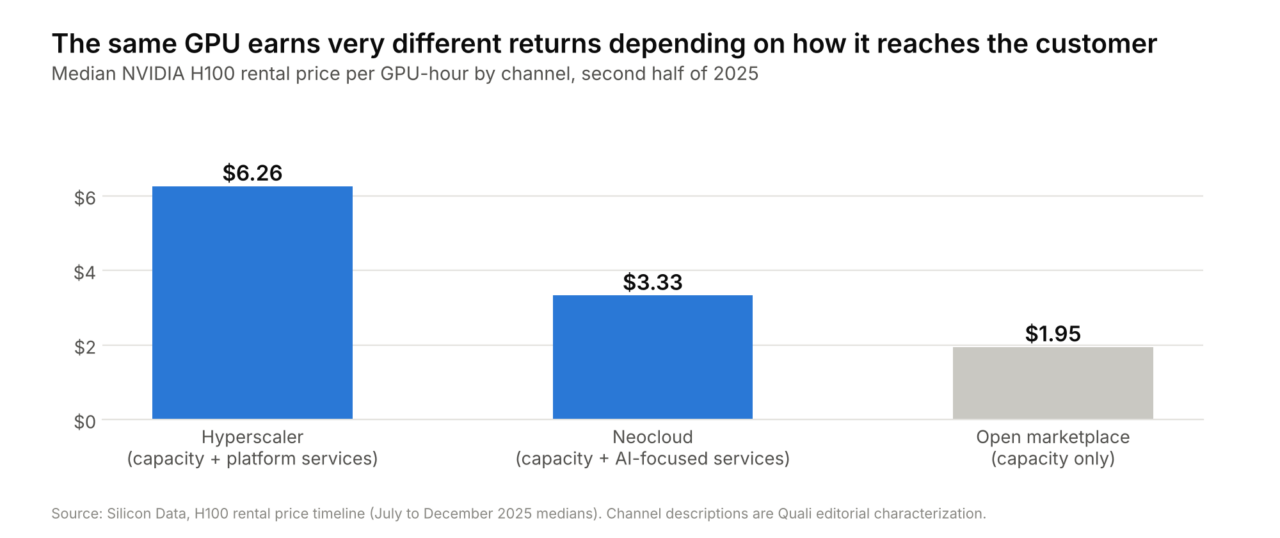
Rental pricing shows how wide that gap can be. Silicon Data’s tracking of NVIDIA H100 rental prices put the median hyperscaler rate at $6.26 per GPU-hour in the second half of 2025, compared with $3.33 for neoclouds and $1.95 on open marketplaces. The silicon is the same in every case. The difference reflects what surrounds it: platform services, reliability commitments, contract terms, support and access to customers who are already buying. The spread is not a pure measure of distribution, but it makes one point clearly. Hardware alone does not set the price. Capacity sold as a bare commodity drifts toward the lowest price, while capacity delivered as part of a complete service holds its value.
NVIDIA’s own path illustrates the same lesson. DGX Cloud launched with NVIDIA renting capacity from cloud partners and reselling it under its own brand. Subsequent reporting indicated that the company had redirected much of that capacity toward internal research and shifted its external emphasis to DGX Cloud Lepton, which connects developers with GPU resources from participating providers rather than reselling them. NVIDIA is not an asset-light intermediary: its influence spans processors, software and cloud-related services. The useful lesson is narrower and more precise. Even the company that makes the GPUs found more strategic value in organizing access to independently operated capacity than in owning the customer-facing capacity itself.
The distinction matters because raw infrastructure rarely represents the complete service an enterprise needs. GPU capacity may be combined with validated software environments, model services, security controls, data management and support. The organization assembling these components can create additional value through specialization and simplicity, while the underlying infrastructure operator continues to supply a critical productive asset.
Federated Infrastructure changes the math
Returning to the airline comparison, the opportunity is larger than filling empty seats. A traveler does not buy a seat in isolation. They buy a flight that includes the seat, the service on board and the network that gets them where they are going. AI infrastructure works the same way. A GPU is one component of a usable environment, and most of the value a customer experiences comes from what runs on it and how it is operated.
Quali CEO Lior Koriat describes the model in three layers. With Torque, infrastructure owners can publish unused capacity as governed Offerings that others can access, while keeping full control of their environment. Empty seats become revenue, and the original investment starts paying back. Torque also lets organizations publish the content and services consumed in every seat: a validated AI stack, a development environment, managed operations, security and support. A customer gets a complete capability, and every contributor earns from the value it adds.
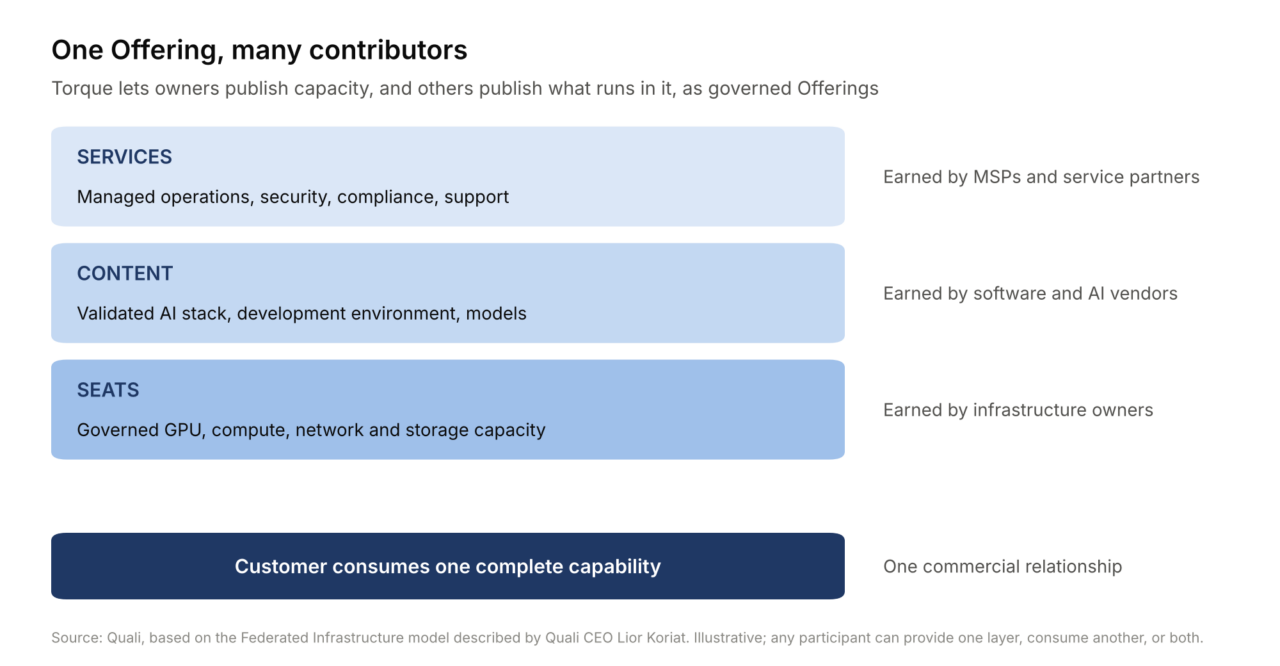
The more consequential idea is that these roles are not fixed. In this model, anyone can be a provider of seats, content or services, a consumer of them, or both. A neocloud can sell capacity and buy the validated stack that makes that capacity attractive to enterprise buyers. A software vendor can deliver an infrastructure-intensive product without building a data center. An enterprise with surplus capacity can publish it while consuming specialized environments it would otherwise have to build. That is how a supply chain becomes an infrastructure economy.
Exhibit 5 | Every participant can be a provider, a consumer or both
| Participant | Provides | Consumes |
| Neocloud or regional GPU operator | Seats: governed GPU capacity published as an Offering | Validated stacks and managed services that make its capacity sellable to more buyers |
| AI software vendor | Content: a validated, ready-to-run AI stack | Seats from operators whose infrastructure it does not own |
| Managed service provider | Services: operations, security, compliance and support | Seats and content from partners, assembled into a managed Offering |
| Enterprise | Surplus capacity or a proven internal environment | Specialized capacity and environments it would otherwise build |
Infrastructure value chains could evolve into multi-party ecosystems
Traditional infrastructure supply chains tend to follow established supplier and customer relationships. Hardware vendors supply operators, operators provide capacity, and software and service companies add capabilities through separate technical and commercial arrangements. Federation creates the possibility of more reusable combinations: a regional operator contributes governed GPU capacity, an AI platform provider adds a validated runtime, and a managed service provider extends the resulting environment with industry-specific controls and support.
Equinix Fabric illustrates a related but different development. It enables software-defined interconnection among networks, cloud providers and other participating services. Equinix is itself a substantial infrastructure owner, and interconnection is not the same as federation of reusable infrastructure offerings. Nevertheless, the example demonstrates that connectivity and ecosystem reach can increase the utility of infrastructure beyond the value of an isolated asset. Federation would extend that principle from connecting environments toward defining, assembling and governing services across provider boundaries.
Exhibit 6 | How value creation could change
| Dimension | Vertically integrated model | Federated ecosystem potential |
| Asset ownership | Provider typically operates core capacity | Capacity can remain with independent operators |
| Service design | Provider defines most of the offering | Partners can assemble and extend capabilities |
| Customer relationship | Often held by the infrastructure provider | May be held by a specialized service assembler |
| Competitive advantage | Scale, efficiency, platform breadth | Scale plus specialization, trust and distribution |
| Principal challenge | Capital intensity and utilization | Interoperability, accountability and commercial coordination |
The potential advantage is not the elimination of infrastructure investment but the expansion of market participation. Regional operators could reach customers through partners, software companies could deliver infrastructure-intensive services without building data centers, and managed service providers could standardize offerings that previously required bespoke integration. The economic outcome would depend on the quality of the underlying capabilities, the terms of participation and the ability to sustain trust across organizational boundaries.
Customer access and service assembly could become more influential
Separating infrastructure ownership from service delivery changes the distribution of commercial influence. Infrastructure operators retain the value of scarce capacity and operational expertise. Service assemblers can differentiate through software, governance and industry knowledge. Organizations controlling procurement and customer relationships may influence which capabilities are selected and how they are priced. These roles can overlap, but they need not reside within one company.
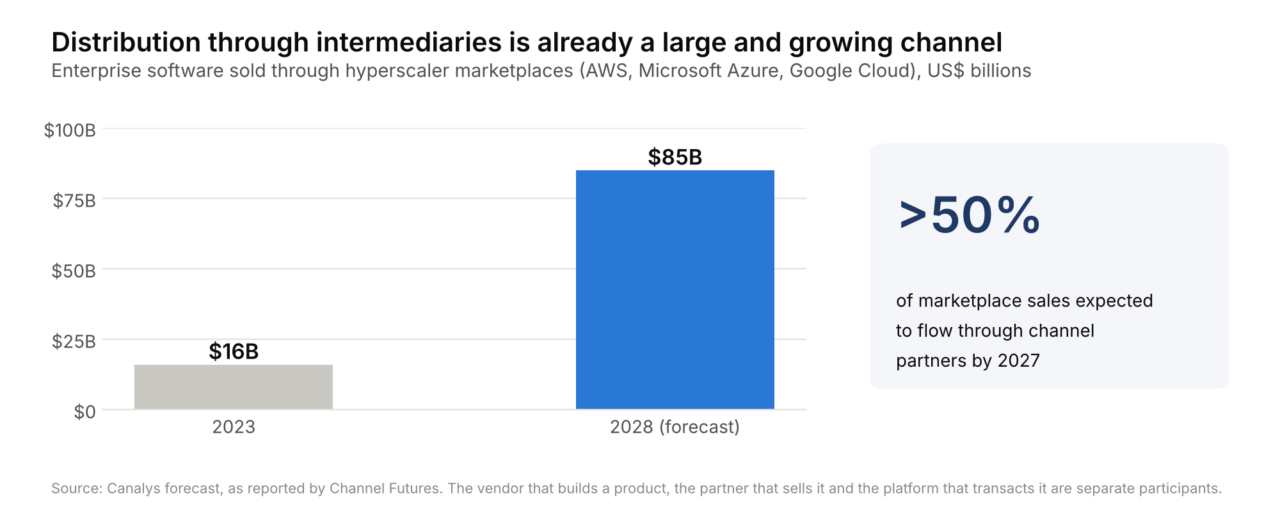
AWS Marketplace offers a useful commercial analogy. Its channel-partner mechanisms allow software vendors and authorized partners to occupy different positions in the route to market, with partners able to structure customer offers through the marketplace. The channel is already substantial. Canalys projects that enterprise software sold through hyperscaler marketplaces will grow from $16 billion in 2023 to $85 billion by 2028, with more than half of those sales expected to flow through channel partners by 2027. This is not an implementation of Federated Infrastructure, nor does it demonstrate cross-provider infrastructure lifecycle management. It does show that the producer of a capability, the organization managing a customer relationship and the platform facilitating a transaction can be distinct participants in a technology value chain, and that buyers are comfortable purchasing that way.
The resulting competitive dynamics will vary. Scarce specialized capacity may preserve strong pricing power for asset owners, while more interchangeable capacity may increase the importance of software, service assurance and distribution. Large cloud providers already combine these advantages and are not necessarily disadvantaged by federation. The opportunity for smaller organizations is to compete through differentiated services and ecosystem reach without replicating the entire vertically integrated stack.
Operational federation requires more than connectivity
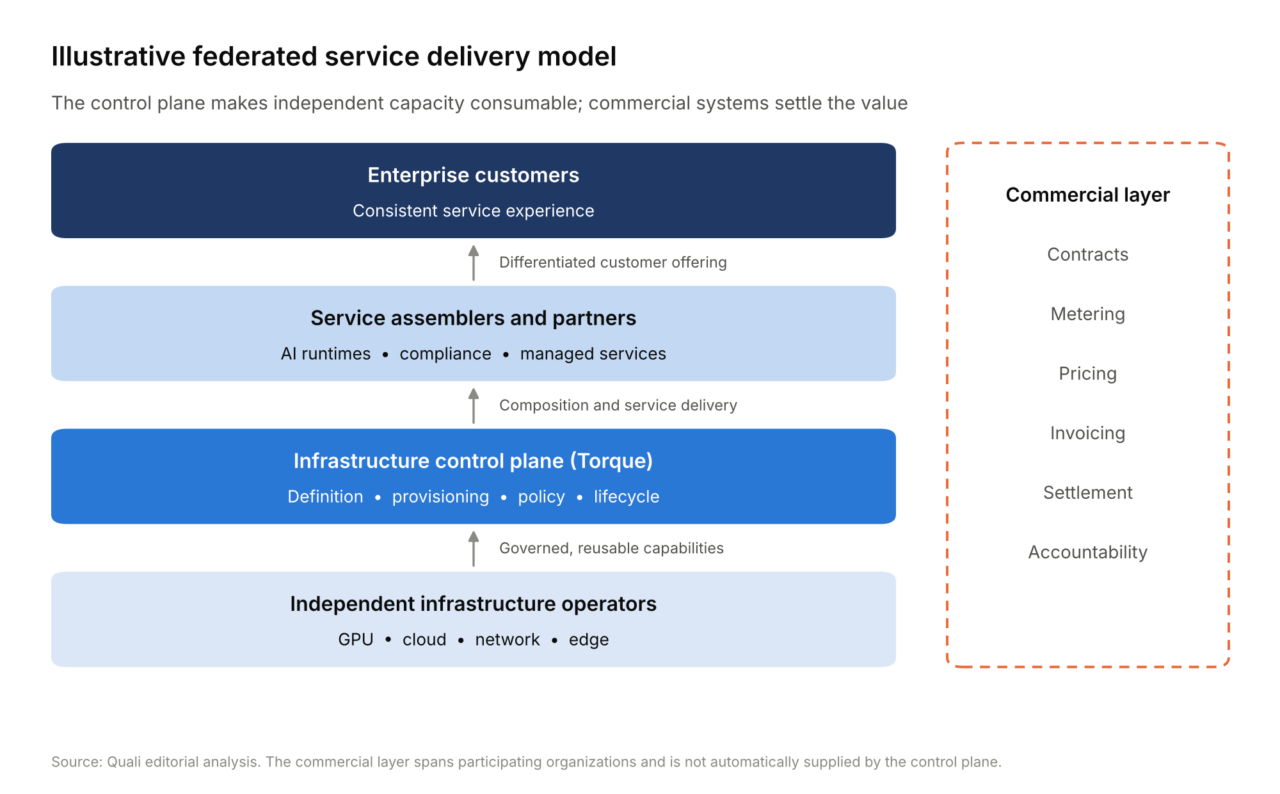
Independently operated environments differ in interfaces, access controls, security requirements, policies and lifecycle practices. Reusing infrastructure capabilities across organizational boundaries therefore requires more than network access or automated provisioning. A capability must be described in a consumable form, delivered under appropriate governance and managed consistently through changes, expiration and retirement.
This is the role of the infrastructure control plane. Torque separates service definitions and consumption from the details of underlying environments, so an owner decides what is published, who may consume it, under what conditions and for how long, without exposing credentials or implementation details. However, technical interoperability does not itself establish billing, revenue sharing, legal responsibility, service-level accountability or settlement. These require commercial arrangements and supporting systems. Treating these as separate layers is essential to a credible account of the emerging infrastructure economy.
The next competitors may not resemble traditional infrastructure providers
As service delivery becomes less dependent on owning every underlying resource, enterprise software companies, systems integrators, regional cloud operators and managed service providers could occupy a larger role in infrastructure markets. A software company with deep industry knowledge might combine independent compute resources with its application platform to deliver a complete managed environment. A regional operator might make locally governed infrastructure available through a wider service ecosystem. An integrator might convert repeatable deployment expertise into standardized offerings rather than rebuilding each environment for every customer.
These scenarios remain conditional. Interoperability, trust, operational accountability, pricing transparency and partner incentives can impede adoption. Established providers also benefit from integrated platforms and existing distribution networks. Federation would not remove these advantages; it could broaden the range of viable competitive strategies and alter where participants choose to specialize.
Distribution platforms could become new centers of market power
Greater interoperability does not guarantee a more fragmented or competitive market. Technology ecosystems often concentrate influence around organizations that simplify access, establish trusted standards and aggregate demand. A federated infrastructure distribution platform could become increasingly valuable as it attracts more suppliers and customers, particularly if participation lowers the cost of delivering and procuring specialized services.
Travel again offers a precedent. The global distribution systems that sit between airlines and travel sellers, such as Amadeus and Sabre, were created by airlines to sell their own seats. Both later became independent companies, and the reservation layer became a business in its own right, without owning a single aircraft. Online travel platforms followed the same pattern with hotel rooms they do not own. In each case, influence accumulated with whoever made fragmented supply easy to find, compare and buy.
Such influence would not amount automatically to monopoly power. Outcomes would depend on switching costs, open standards, customer choice, competing ecosystems and the ability of providers to preserve direct commercial relationships. Nevertheless, the strategic possibility is consequential: market leadership could increasingly reflect the ability to coordinate access to infrastructure, not only the scale of the infrastructure owned.
Infrastructure strategy must expand beyond the asset base
Infrastructure providers should therefore evaluate their assets not only by capacity, utilization and direct revenue but also by their potential to participate in partner-led services. Software vendors and managed service providers should assess where reusable external capabilities could support differentiated offerings. Enterprises should consider whether service composition across independent operators can meet their performance, security, sovereignty and commercial requirements more effectively than a single-provider approach.
The long-term opportunity is a more flexible division of labor across the infrastructure economy. Ownership, service assembly, governance and customer access can remain closely integrated where that model is advantageous, or become distributed among specialized organizations where collaboration creates greater value. The companies best positioned to lead may be those that make independently operated infrastructure useful to the widest range of customers and partners.
For infrastructure owners, the question is no longer only what you own, but how broadly it can create value. The next influential infrastructure platform may be defined less by the assets on its balance sheet than by the ecosystem it enables.
Explore the Federated Infrastructure Opportunity.Evaluate where federation could improve utilization, expand market access or enable new services.
- Read the blog overview: The New Economics of IT infrastructure
- Read the full white paper: Federated Infrastructure: The New Economics of IT Infrastructure
- Explore the interactive article: Navigate the architecture, concepts and commercial models behind the emerging infrastructure economy.
- Blog: Infrastructure, Unbound: Build Once. Deliver Anywhere. Extend Everywhere.
- Blog: Federated Infrastructure: When Infrastructure Stops Belonging to a Location.
See how Torque provides the control plane for infrastructure automation across cloud, data center and edge environments, or talk to us about how federated infrastructure could apply to your environment.