By Lior Koriat, CEO, Quali
This week at Cisco Live, Cisco announced Stack Automation by Quali. I want to explain what it is, why we built it, and why, from where I sit as Quali’s CEO, this partnership represents something genuinely new for enterprise infrastructure.
Kevin Wollenweber’s blog captures the Cisco perspective well: enterprises are under immense pressure to operationalize AI, and the path from purchased infrastructure to a running production environment is still far too slow. He describes Stack Automation as the answer to that Day 0-1 bottleneck, the ability to move from rack to application in hours, not weeks.
I want to give you the inside story on what it took to get here, and what it actually means.
The Problem We Kept Seeing
Quali has spent over a decade building infrastructure automation for enterprise IT. We’ve worked with some of the world’s largest financial institutions, technology companies, and government agencies. We’ve seen what happens when infrastructure deployment is done well, and we’ve seen what happens when it isn’t.
What we kept seeing, especially over the past two years as AI infrastructure investments accelerated, was a recurring and deeply frustrating pattern. Organizations had the hardware, clusters, validated architectures. They had executive backing. They had clear use cases. And they were still weeks, sometimes months, into their projects, with their best engineers debugging configuration issues.
The hardware wasn’t the bottleneck. The activation of and governed accessibility to that hardware was the bottleneck.
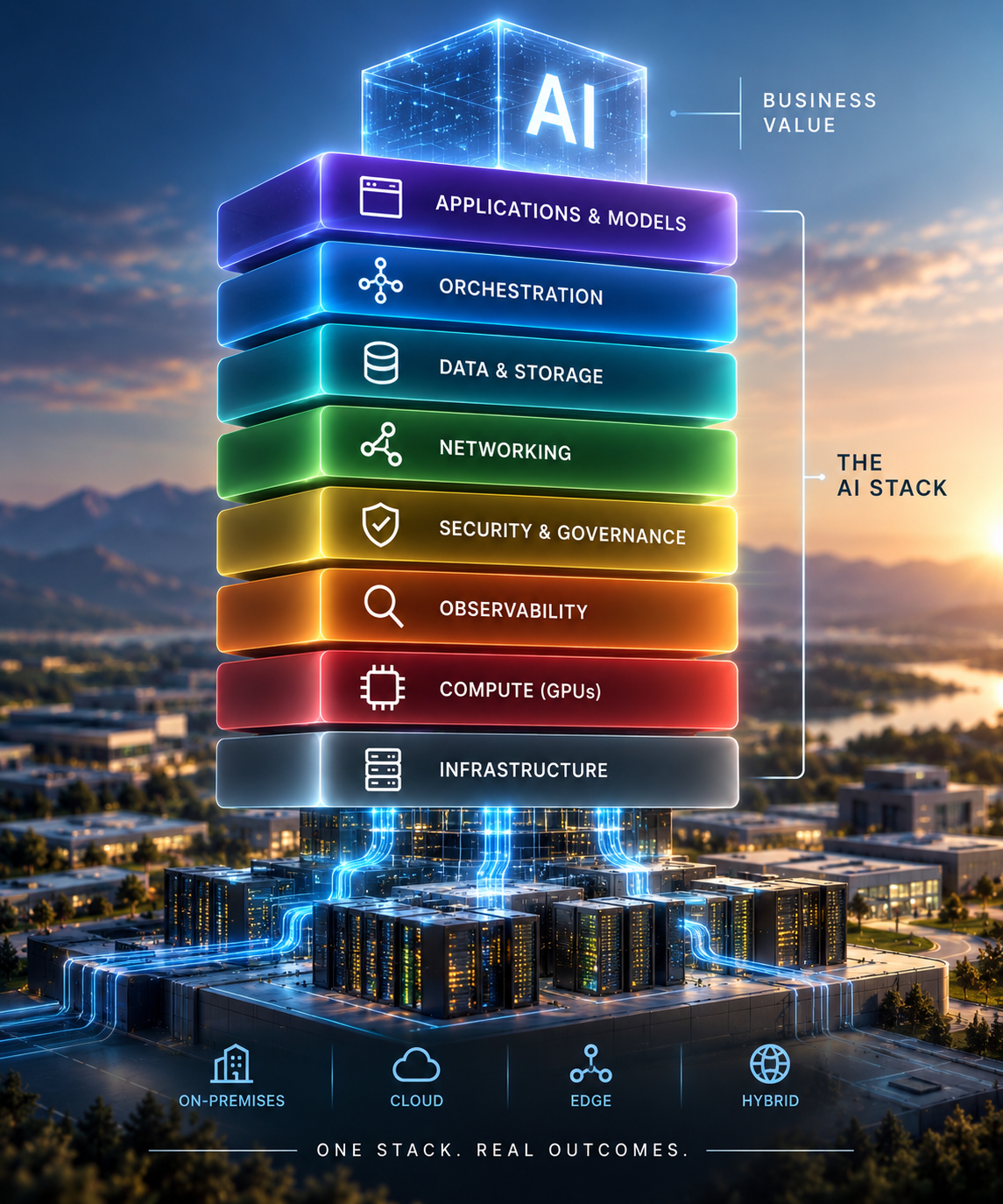
Deploying a production AI environment isn’t just provisioning a server. It means orchestrating accelerated compute, networking, storage, software layers, AI frameworks, third-party tooling, security, and observability, and bringing all of it together in a way that’s validated, repeatable, at enterprise and production grades. When you’re doing that manually, with multiple vendor engagements, fragmented tooling, and no unified workflow, weeks becomes the floor, not the ceiling.
But slow activation is only half the problem. Even after an AI factory is stood up, the economics rarely work the way they should. GPU clusters sit pre-allocated and underutilized, reserved for peak workloads that never fully materialize, while the cost per token stays stubbornly high and the business case for the investment erodes. The real measure of an AI factory is not whether it can run a workload. It is whether it can run the right workload, on demand, at the right utilization level, at a cost the business can justify. Stack Automation was built for both problems: getting to production fast, and keeping production economically efficient once you are there.
That’s the problem Stack Automation was built to solve.
Why Cisco, and Why Now
Quali has had a long relationship with Cisco. Our automation engine has powered the Cisco DevNet Sandbox for years, giving software developers and network engineers reliable, on-demand access to complex real-world IT environments. We know how Cisco infrastructure works. We know what it takes to automate against it reliably, at enterprise scale.
When we began working with the Cisco Compute and AI team on co-engineering a solution purpose-built for their AI infrastructure deployments, the conversation moved fast, because we were both solving the same problem from different directions. Cisco had the world’s most trusted, most widely deployed enterprise compute and networking infrastructure. Quali had the automation intelligence, the orchestration engine, and a decade of hard-won enterprise automation expertise.
The gap between those two things is exactly the activation gap I described above. Closing it was the goal of the partnership.
What we built is not a Cisco product. It is not a Quali product with a Cisco logo. It is something we co-engineered, deeply integrated with Cisco’s validated designs, native to Cisco’s infrastructure platforms, and built on Quali’s Torque automation engine. The depth of that co-engineering is what makes Stack Automation different from any other deployment automation tool in the market.
And here is where the Cisco advantage takes on a dimension that most people don’t immediately see, and that I think is the most strategically significant thing about this platform.
Stack Automation is not built just for organizations that have standardized entirely on Cisco. It is built for organizations that operate in the real world, where infrastructure is heterogeneous, tooling is fragmented, vendor sprawl is the norm, and no single company owns the entire stack. That is not a niche condition. That is every enterprise on the planet.
The real-world enterprise environment includes Cisco networking sitting alongside VMware virtualization, NVIDIA compute, Red Hat OpenShift, third-party storage from Qumulo or Veeam, security tooling from multiple vendors, and ISV applications built by dozens of independent software companies. It includes automation code written in Terraform, Ansible, Helm, Python, and Shell, accumulated over years, representing investments no organization is going to throw away. It includes teams with deeply held tool preferences, existing workflows, and hard-won institutional knowledge built around the tools they already use.
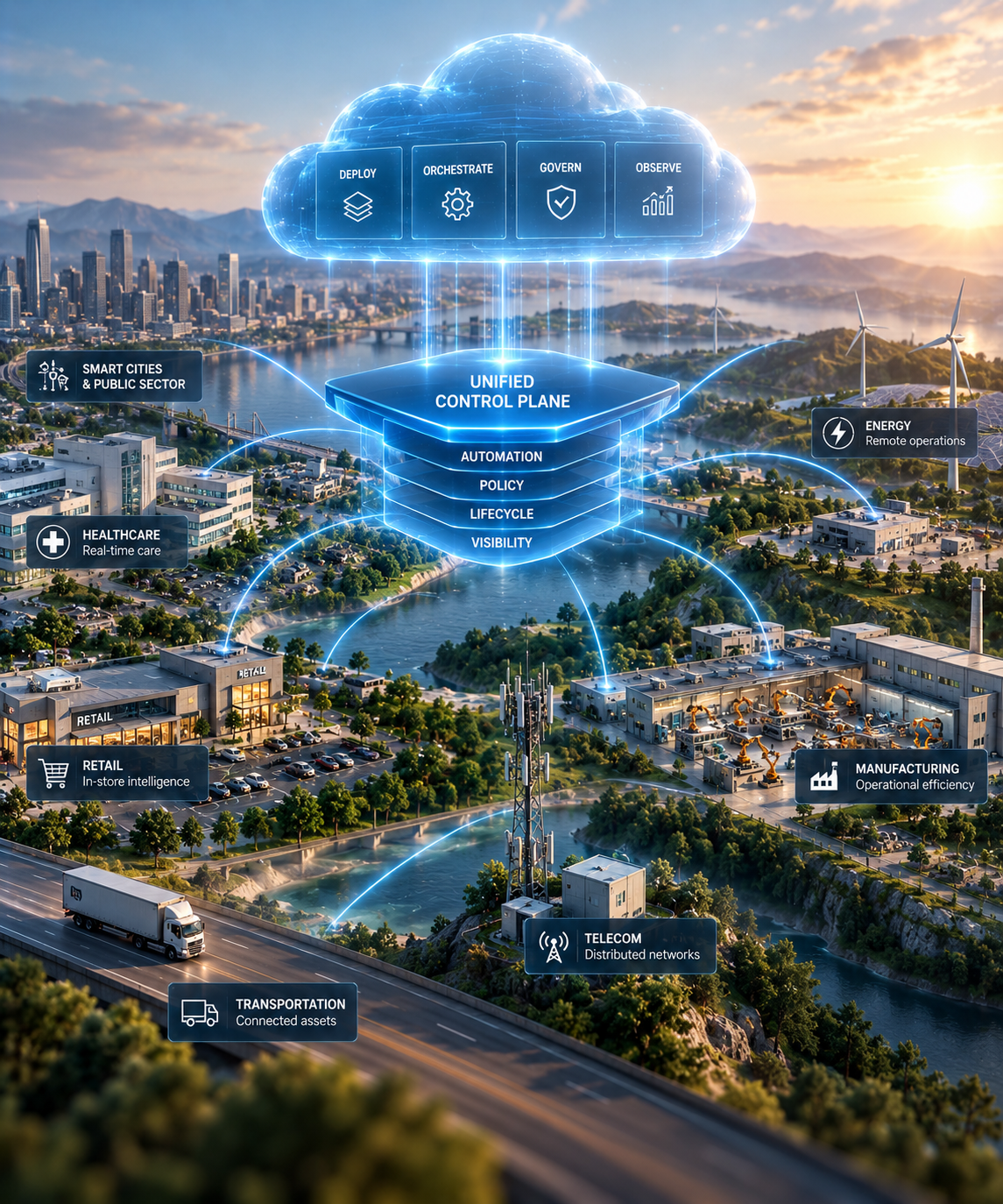
Stack Automation does not ask any of that to change. It orchestrates all of it, from a single unified workflow, governed by a single policy framework, with Cisco validated designs as the trusted backbone running through the center.
That is what makes this a genuine full-stack management platform The scope is every infrastructure layer, every tool, and every application in the environment. Stack Automation is positioned as the trusted anchor and orchestration layer for the entire heterogeneous enterprise estate.
No pure-play automation vendor can replicate that position because they lack the validated infrastructure foundation. No hardware-only play can touch it because they lack the automation intelligence. Stack Automation is what happens when you bring both together, and the breadth of what it manages is exactly the point.
What Stack Automation Actually Does
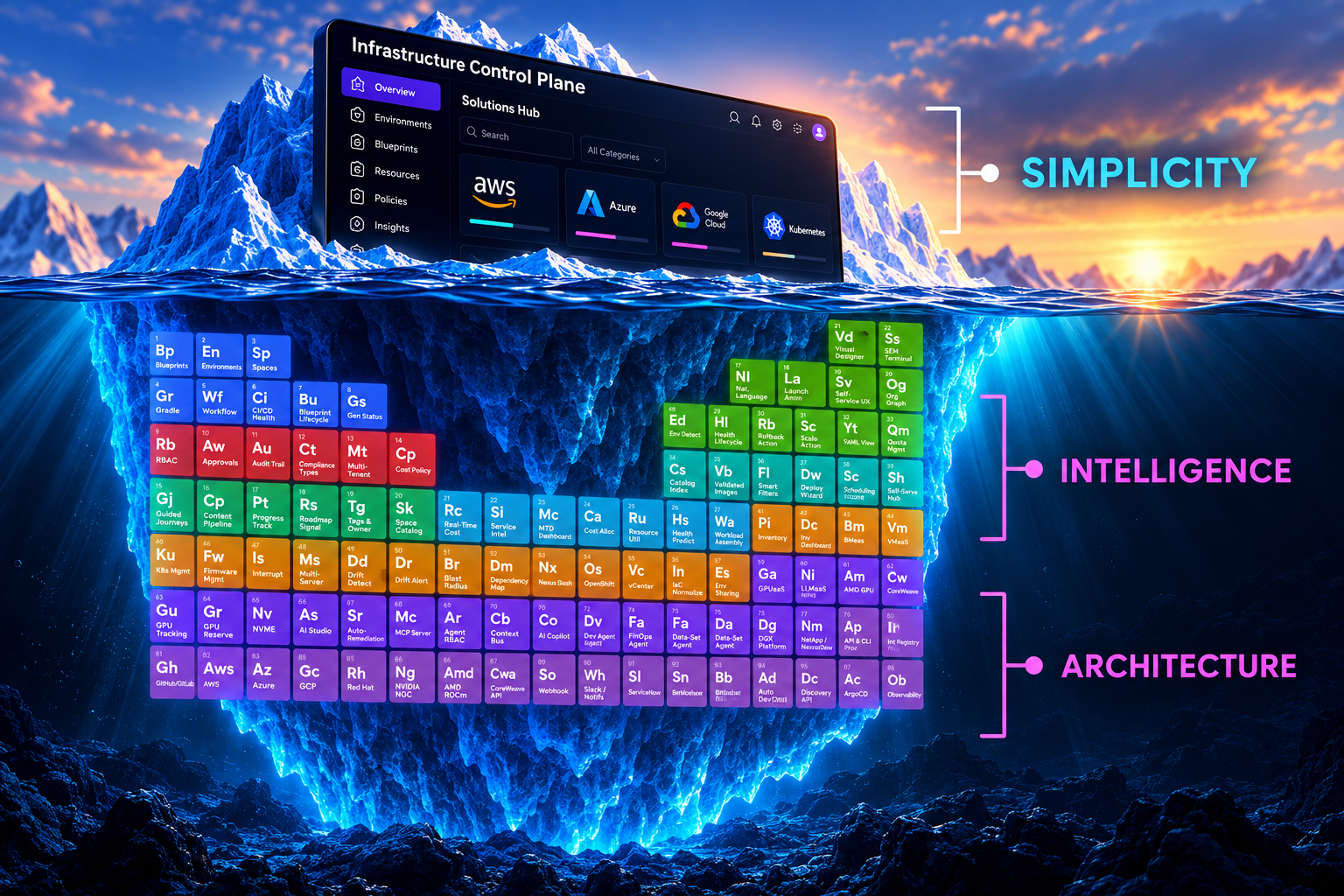
At its core, Stack Automation provides a single, governed, automated workflow that takes you from raw infrastructure to a production-ready application environment, covering every layer of the stack:
- Physical infrastructure: compute, networking, and storage configuration validated against Cisco’s reference architectures, with automated pre-deployment validation of hardware readiness built in.
- Cisco software: Nexus Dashboard, Intersight, Catalyst Center, ISE, Splunk, and the full suite of Cisco infrastructure software, provisioned and configured automatically, using Cisco Validated Designs as the baseline.
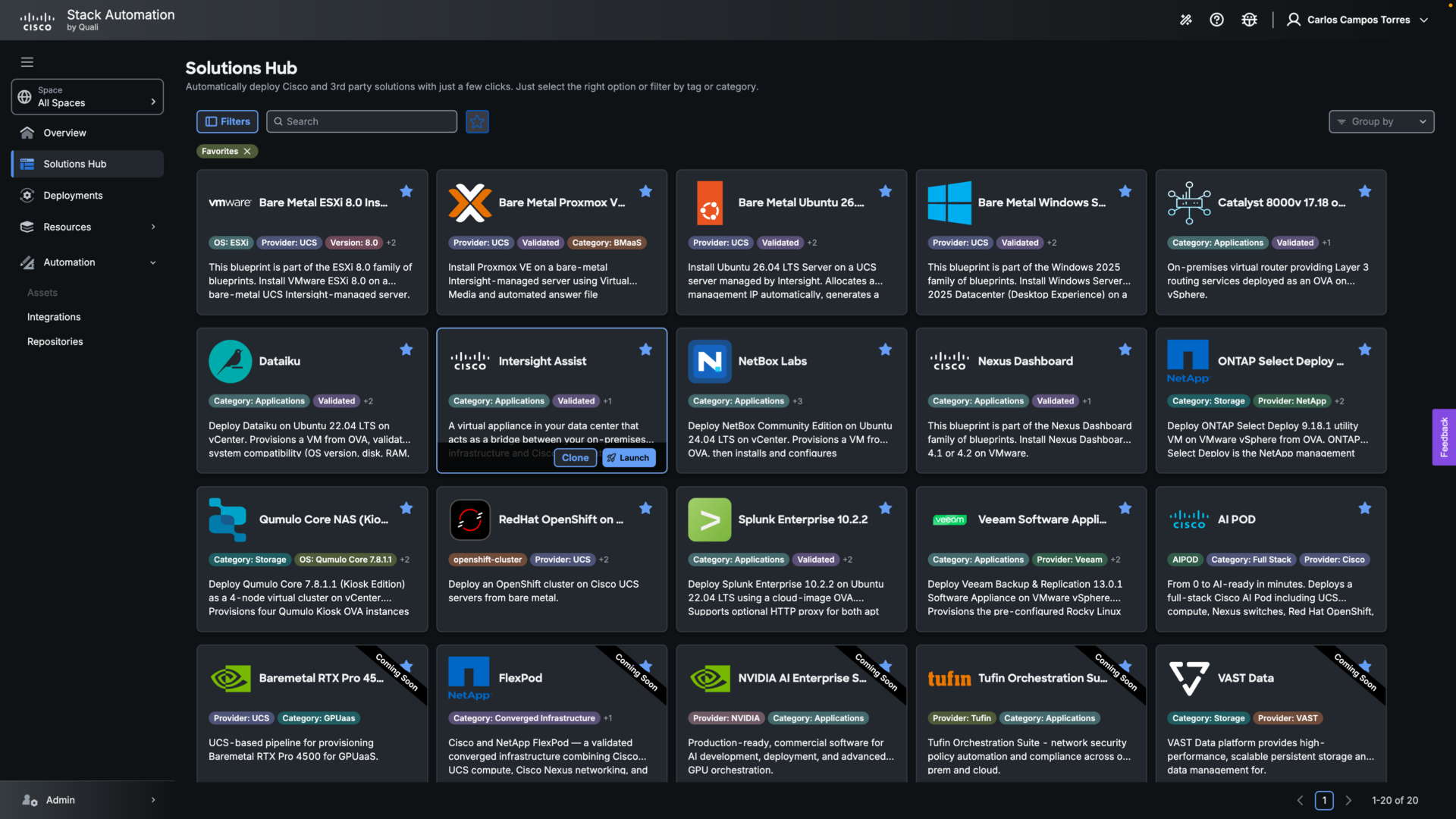
- Third-party and ISV applications: OpenShift, NVIDIA NIMs, Qumulo, Veeam, and a growing catalog of Cisco Compatible AI Solutions, all deployable from the same unified workflow, all pre-validated for compatibility.
- Security and observability: not bolted on at the end, not left as a follow-up task. Cisco-recommended security settings and best practices are embedded into every blueprint, applied from the moment of deployment.
The result is a “rack-to-app” experience that compresses a multi-week, multi-team, manual process into an automated workflow measured in hours. Stack Automation is available today in a controlled beta, targeting general availability in August 2026. Organizations interested in early access can join the beta program at stackautomation@cisco.com or speak with their Cisco representative.
What Makes It Different: The Blueprint Approach
The reason Stack Automation can deliver that promise reliably, not just in demos but in production at enterprise scale, is the blueprint model.
Every deployment runs from a validated blueprint: a codified, tested, reusable configuration that encapsulates the entire stack. Blueprints are pre-validated and they ship with the platform. And they’re designed to be the starting point, not the ceiling.
Teams that need to customize can clone a curated blueprint and modify it. Teams building net-new environments can use the Blueprint Designer to drag-and-drop existing automation assets, Terraform, Ansible, Helm, Python, Shell, into a governed workflow. And teams that want to go further can engage the platform’s agentic intelligence layer: NVIDIA NemoClaw, Anthropic Claude, and Quali SKILLS, integrated directly into the design process for AI-assisted blueprint generation and optimization.
The platform also includes automated pre-flight validation that catches configuration errors before they cause deployment failures; Beyond Day 0-1, Stack Automation brings agentic intelligence to ongoing production operations. The platform continuously monitors live infrastructure state, derives intent from running workloads, and acts, not just alerts. When a configuration drifts from its validated baseline, the system reconciles it.
When a workload’s resource profile changes, the platform detects it and surfaces the optimization. When an anomaly emerges, an agent investigates and recommends remediation before a human ticket is ever opened. The goal is an infrastructure that understands what is running on it and manages itself accordingly.
This is not a one-time deployment tool. It’s a full platform with the governance and operational intelligence that enterprises actually need from Dat zero to production.
The Bigger Picture
I want to be direct about what this partnership represents, because I think it matters beyond the product announcement itself.
For years, enterprise IT has faced a structural tradeoff: the speed of cloud deployment, or the trust and control of on-premises infrastructure. Public cloud gives you velocity. On-premises infrastructure gives you governance, security, and compliance posture. Choosing between them has always meant giving something up.
Stack Automation was built to end that tradeoff.
Cisco’s infrastructure is trusted by the most security-conscious, compliance-driven organizations on the planet. That trust took decades to earn. Quali’s automation engine makes that trusted infrastructure move at cloud speed. Together, Stack Automation delivers something that hasn’t existed before: a deployment experience with the reliability of a Cisco-validated architecture and the velocity of a cloud platform.
The enterprises that will lead in the AI era are not just the ones with the best hardware. They’re the ones that can activate that hardware fastest, govern it most reliably, and scale it consistently across complex, distributed, production environments. Stack Automation is how Cisco and Quali are helping them do exactly that.
There is a third constituency that matters here, and that is the partner ecosystem. Managed service providers have long been constrained by what human operators can monitor, interpret, and act on across a complex customer estate. Stack Automation changes the economics of that equation.
When automation is grounded in true infrastructure state, and when agentic operations can derive intent from what is actually running in production rather than from a static configuration database, partners can deliver a category of managed service that simply was not possible before. Proactive, intelligent, and scalable, not because you hired more engineers, but because the platform does the operational reasoning for you. This is what elevated managed services looks like in the AI era, and it is one of the most significant go-to-market opportunities the Stack Automation platform enables.
Jeremy Foster, SVP & General Manager at Cisco, framed it precisely in his blog this week: “The organizations that move fastest won’t simply be the ones with the most GPUs. They’ll be the ones that can deploy, govern, secure, and scale AI reliably across real production environments”.
That’s the product we’ve co-developed with Cisco delivers. And if you’re at Cisco Live this week, I hope you’ll come see it.
Learn more at quali.com/stack-automation
Or speak to your Cisco representative.
Press Release: https://www.quali.com/resource/quali-and-cisco-just-changed-how-enterprise-ai-gets-built/
Links to Cisco executive blogs
AI infrastructure has entered its operational era – Jeremy Foster, SVP and GM Cisco
From AI Ambition to Industrial Scale Infrastructure – Kevin Wollenweber, SVP & GM Cisco